+UREDBA (EZ) br. 648/2004 EUROPSKOG PARLAMENTA I VIJEĆA od 31. ožujka 2004. o deterdžentima (Tekst značajan za EGP)
---+Preamble: 1
---+Članak 1. Ciljevi i područje primjene
---+Članak 2. Definicije
---+Članak 3. Stavljanje u promet
---+Članak 4. Ograničenja koja se temelje na biorazgradivosti površinski aktivnih tvari
---+Article 4a Limitations on the content of phosphates and of other phosphorus compounds
---+Članak 5. Odobrenje odstupanja
---+Članak 6. Uvjeti za odobrenje odstupanja
---+Članak 7. Ispitivanje površinski aktivnih tvari
---+Članak 8. Obveze država članica
---+Članak 9. Podaci koje trebaju dostaviti proizvođači
---+Članak 10. Nadzorne mjere
---+Članak 11. Označivanje
---+Članak 12. Odborski postupak
---+Članak 13. Prilagodba priloga
---+Article 13a Exercise of the delegation
---+Članak 14. Klauzula o slobodnom protoku
---+Članak 15. Zaštitna odredba
---+Članak 16. Izvještavanje
---+Članak 17. Propisi koje treba staviti izvan snage
---+Članak 18. Sankcije
---+Članak 19. Stupanje na snagu
---+ANNEX I Standards of accreditation, good laboratory practice and animal protection concerning the laboratories that are competent and authorised to provide the necessary service for checking compliance of detergents with the requirements of this Regulation and its Annexes
---+ANNEX II PRIMARY BIODEGRADABILITY TEST METHODS FOR SURFACTANTS IN DETERGENTS
---+ANNEX III
---+ANNEX IV COMPLEMENTARY RISK ASSESSMENT FOR SURFACTANTS IN DETERGENTS
---+ANNEX V
---+ANNEX VI
---+PRILOG VI.a
---+ANNEX VII LABELLING AND INGREDIENT DATA SHEET
---+ANNEX VIII TEST METHODS AND ANALYTICAL METHODS
|
English -
European Union -
Environment -
UREDBA (EZ) br. 648/2004 EUROPSKOG PARLAMENTA I VIJEĆA od 31. ožujka 2004. o deterdžentima (Tekst značajan za EGP)
UREDBA (EZ) br. 648/2004 EUROPSKOG PARLAMENTA I VIJEĆA od 31. ožujka 2004. o deterdžentima (Tekst značajan za EGP) 1. Pregled
| Naslov |
Regulativa |
|
Preamble: 1
|
THE EUROPEAN PARLIAMENT AND THE COUNCIL OF THE EUROPEAN UNION,
Having regard to the Treaty establishing the European Community, and in particular Article 95 thereof,
Having regard to the proposal from the Commission,
Having regard to the Opinion of the European Economic and Social Committee (
1
),
Acting in accordance with the procedure laid down in Article 251 of the Treaty (
2
), Whereas:
|
(1)
|
Council Directives 73/404/EEC of 22 November 1973 on the approximation of the laws of the Member States relating to detergents (
3
), 73/405/EEC of 22 November 1973 on the approximation of the laws of the Member States relating to methods of testing the biodegradability of anionic surfactants (
4
), 82/242/EEC of 31 March 1982 on the approximation of the laws of the Member States relating to methods of testing the biodegradability of non-ionic surfactants (
5
), 82/243/EEC of 31 March 1982 amending Directive 73/405/EEC on the approximation of the laws of the Member States relating to methods of testing the biodegradability of anionic surfactants (
6
) and 86/94/EEC of 10 March 1986 amending for the second time Directive 73/404/EEC on the approximation of the laws of the Member States relating to detergents (
7
), have been significantly amended on several occasions. It is desirable, for reasons of clarity and rationalisation, that the provisions in question should be recast by bringing them all together in a single text. Commission Recommendation 89/542/EEC of 13 September 1989 (
8
), as regards labelling provisions concerning detergents and cleaning products, should also be included in the single text.
|
|
(2)
|
Since the objective of this Regulation, to ensure the internal market in detergents, cannot be sufficiently achieved by the Member States, if there is no common technical criteria throughout the Community, and can therefore be better achieved at Community level, the Community may adopt measures, in accordance with the principle of subsidiarity as set out in Article 5 of the Treaty. In accordance with the principle of propotionality, as set out in that Article, this Regulation does not go beyond what is necessary in order to achieve that objective. A Regulation is the appropriate legal instrument as it imposes directly on manufacturers precise requirements to be implemented at the same time and in the same manner throughout the Community; in the area of technical legislation, uniformity of application in the Member States is needed, and this can only be guaranteed by a Regulation.
|
|
(3)
|
A new definition for detergents is needed to cover equivalent uses and be in line with developments at Member State level.
|
|
(4)
|
It is necessary to introduce a surfactant definition, which was lacking in the existing legislation.
|
|
(5)
|
It is important to give a clear and precise description of the relevant types of biodegradability.
|
|
(6)
|
Measures concerning detergents should be adopted to ensure the functioning of the internal market and avoid restricting competition in the Community.
|
|
(7)
|
As confirmed by the Commission White Paper on the strategy for a future Chemical Policy, appropriate measures concerning detergents should ensure a high level of environmental protection, especially of the aquatic environment.
|
|
(8)
|
Detergents are already subject to certain Community provisions concerning their manufacture, proper handling, usage and labelling, in particular with reference to Commission Recommendation 89/542/EEC and Commission Recommendation 98/480/EC of 22 July 1998 concerning good environmental practice for household laundry detergents (
9
); Directive 1999/45/EC of the European Parliament and of the Council of 31 May 1999 concerning the approximation of the laws, regulations and administrative provisions of the Member States relating to the classification, packaging and labelling of dangerous preparations (
10
) applies to detergents.
|
|
(9)
|
Ditallow-dimethyl-ammonium-chloride (DTDMAC) and nonylphenol (including ethoxylates derivatives-APEs) are priority substances undergoing at Community level risk assessment activities, in accordance with Council Regulation (EEC) No 793/93 of 23 March 1993 on the evaluation and control of the risks of existing substances (
11
), and if necessary adequate strategies to limit the risks of exposure to these substances should therefore be recommended and implemented in the framework of other Community provisions.
|
|
(10)
|
The existing legislation on biodegradability of surfactants in detergents only covers primary biodegradability (
12
) and it is only applicable to anionic (
13
) and non-ionic (
14
) surfactants; therefore it should be replaced by new legislation, which lays the main emphasis on ultimate biodegradability and meets the important concerns related to the potential toxicity of persistent metabolites.
|
|
(11)
|
This requires the introduction of a new set of tests based on EN ISO standards and OECD guidelines, which governs the granting of direct permission for placing detergents on the market.
|
|
(12)
|
To provide a high level of protection of the environment, detergents not fulfilling requirements laid down by this Regulation should not be placed on the market.
|
|
(13)
|
On 25 November 1999 the Scientific Committee on Toxicity, Ecotoxicity and the Environment issued an opinion on biodegradability of surfactants in detergents and relevance of test-methods for regulatory control in this area.
|
|
(14)
|
The existing requirements regarding primary biodegradability should be maintained on a second hierarchy level and supplemented by a complementary risk assessment, for those surfactants failing ultimate biodegradability tests; furthermore surfactants failing primary biodegradability tests should not obtain marketing authorisation by way of derogation
|
|
(15)
|
The primary biodegradability requirements should be extended to all surfactants, in particular cationic and amphoteric, whilst allowing the possibility of applying instrumental analyses in those cases in which semi-specific analytical methods are not suitable.
|
|
(16)
|
The determination of biodegradability test-methods and the record-keeping of lists of derogations are technical matters and should be revised taking into account technical and scientific developments as well as regulatory developments.
|
|
(17)
|
Test-methods should produce data that give sufficient assurance of aerobic biodegradability of surfactants in detergents.
|
|
(18)
|
Methods to test biodegradability of surfactants in detergents may produce variable results. In such cases they should be complemented by additional assessments in order to determine the risks of continued use.
|
|
(19)
|
Provisions should also be laid down regarding the placing on the market in exceptional cases of surfactants in detergents failing ultimate biodegradability tests and this should take place on the basis of all relevant information to ensure environmental protection and on a case by case basis.
|
|
(20)
|
The measures necessary for the implementation of this Regulation should be adopted in accordance with Council Decision 1999/468/EC of 28 June 1999 laying down the procedures for the exercise of implementing powers conferred on the Commission (
15
).
|
|
(21)
|
It is appropriate to recall that other horizontal legislation is applicable to detergent surfactants, in particular Council Directive 76/769/EEC of 27 July 1976 on the approximation of the laws, regulations and administrative provisions of the Member States relating to restrictions on the marketing and use of certain dangerous substances and preparations (
16
) by which the marketing and use of dangerous substances covered by this Regulation might be banned or restricted, Council Directive 67/548/EEC of 27 June 1967 on the approximation of laws, regulations and administrative provisions relating to the classification, packaging and labelling of dangerous substances (
17
), Commission Directive 93/67/EEC of 20 July 1993 laying down the principles for assessment of risks to man and the environment of substances notified in accordance with Council Directive 67/548/EEC (
18
), Regulation (EEC) No 793/93, and Commission Regulation (EC) No 1488/94 of 28 June 1994 laying down the principles for the assessment of risks to man and the environment of existing substances (
19
); Directive 98/8/EC of the European Parliament and of the Council of 16 February 1998 concerning the placing of biocidal products on the market (
20
); Directive 2004/10/EC of the European Parliament and of the Council of 11 February 2004 on the harmonisation of laws, regulations and administrative provisions relating to the application of the principles of good laboratory practice and the verification of their application for tests on chemical substances (codified version) (
21
); Directive 2004/9/EC of the European Parliament and of the Council of 11 February 2004 on the inspection and verification of good laboratory practice (GLP) (codified version) (
22
); and Council Directive 86/609/EEC of 24 November 1986 on the approximation of laws, regulations and administrative provisions of the Member States regarding the protection of animals used for experimental and other scientific purposes (
23
).
|
|
(22)
|
It should be the responsibility of manufacturers to refrain from marketing detergents not complying with this Regulation and to have at the disposal of the national authorities the technical files for all substances and
►M2
mixtures ◄ covered by this Regulation; this should also apply to surfactants that have failed to pass the tests mentioned in Annex III.
|
|
(23)
|
Manufacturers should be able to request a derogation from the Commission, which should have the possibility to grant such derogation in accordance with the procedure referred to in Article 12(2).
|
|
(24)
|
Member States' competent authorities should be able to apply control measures to detergents on the market, but should avoid repeating tests made by the competent laboratories.
|
|
(25)
|
The existing labelling provisions for detergents should be continued, including those in Recommendation 89/542/EEC, which are included in this Regulation in order to fulfil the objective of modernising the rules on detergents. Specific labelling is introduced to inform consumers about fragrance substances and preservation agents that are present in detergents. Medical personnel should be able to obtain from the manufacturer upon request a full listing of all ingredients of a detergent to assist them investigate whether a causal link exists between the development of an allergic response and exposure to a particular chemical substance, and Member States should be able to require that such a listing is also made available to a specific public body designated to provide this information to medical personnel.
|
|
(26)
|
All the above points call for new legislation replacing the existing legislation; however, for a certain period, Member States can continue to apply their existing laws.
|
▼M3 —————
▼B
|
(28)
|
Detergents complying with this Regulation should be allowed to be placed on the market without prejudice to other relevant Community provisions.
|
|
(29)
|
In order to ensure the protection of man and the environment from unforeseen risks of detergents, a safeguard clause is needed.
|
|
(30)
|
The tests specified for the biodegradability of surfactants should be carried out in laboratories meeting an internationally recognised standard, namely EN/ISO/IEC/17025 or the principles of good laboratory practice; it would not be justified to ask for the application of this latter requirement to existing surfactants to the extent that the available tests on them had been performed before the entering into force of the above standard and still provide a comparable level of scientific quality.
|
|
(31)
|
The issues relating to anaerobic biodegradation, the biodegradation of the main non-surfactant organic detergent ingredients, and phosphate content, which are not dealt with in this Regulation should be examined by the Commission and, where this is justified, a proposal should be presented to the European Parliament and the Council. Pending further harmonisation, the Member States may maintain or lay down national rules concerning the above issues.
|
|
(32)
|
The five Directives and the Commission Recommendation mentioned in recital (1) which are replaced by this Regulation should be repealed,
|
HAVE ADOPTED THIS REGULATION:
|
|
Članak 1. Ciljevi i područje primjene
|
Članak 1. Ciljevi i područje primjene 1. Ovom se Uredbom utvrđuju pravila čija je svrha postizanje slobodnog kretanja deterdženata i površinski aktivnih tvari za deterdžente na europskom tržištu uz istodobno osiguranje visokog stupnja zaštite okoliša i ljudskog zdravlja. 2. U tu se svrhu ovom Uredbom usklađuju sljedeća pravila za stavljanje u promet deterdženata i površinski aktivnih tvari za deterdžente:
— biorazgradivost površinski aktivnih tvari u deterdžentima,
— ograničenja ili zabrane za površinski aktivne tvari na temelju biorazgradivosti,
▼M5
— dodatno označivanje deterdženata, uključujući alergene iz mirisa,
— informacije koje proizvođači moraju dati na uvid nadležnim tijelima država članica i zdravstvenom osoblju,
— ograničenja o udjelu fosfata i drugih spojeva fosfora u deterdžentima za pranje rublja i deterdžentima za strojno pranje posuđa koji se koriste u kućanstvu.
▼B
|
|
Članak 2. Definicije
|
Članak 2. Definicije U smislu ove Uredbe:
1. „Deterdžent” znači svaka tvar ili
►M2
smjesa ◄ koji sadržava sapune i/ili druge površinski aktivne tvari namijenjene za procese pranja i čišćenja. Deterdženti mogu biti u bilo kojem obliku (tekućine, prašci, paste, šipke, blokovi, kalupom ili na drugi način oblikovani komadi itd.), a stavljaju se u promet ili se rabe u kućanstvu ili u profesionalne ili industrijske svrhe.
Ostali proizvodi koje treba smatrati deterdžentima jesu:
— „pomoćna
►M2
smjesa ◄ za pranje”namijenjena za namakanje (pretpranje), ispiranje ili izbjeljivanje odjeće i rublja u kućanstvu itd.,
— „omekšivač za rublje” namijenjen za mijenjanje osjeta tkanine na dodir u procesima koji trebaju dopuniti pranje tkanine,
— „
►M2
smjesa ◄ za čišćenje”namijenjena kao univerzalno sredstvo za čišćenje za uporabu u kućanstvu i/ili drugo čišćenje površina (npr.: materijala, proizvoda, strojeva, mehaničkih naprava, prijevoznih sredstava i njima povezane opreme, instrumenata, aparature itd.),
— „ostale smjese za čišćenje i pranje”namijenjene za sve druge procese pranja i čišćenja,
▼M5
1.a. „Deterdžent za pranje rublja koji se koristi u kućanstvu” je deterdžent za rublje koji se stavlja na tržište za neprofesionalne korisnike uključujući uporabu u javnim praonicama.
1.b. „Deterdžent za strojno pranje posuđa koji se koristi u kućanstvu” je deterdžent koji se stavlja na tržište za uporabu u perilicama posuđa za neprofesionalne korisnike.
▼B
2. „Pranje” znači čišćenje rublja, tkanina, posuđa i drugih tvrdih površina.
▼M5
3. „Čišćenje” je postupak kojim se neželjena naslaga uklanja sa substrata ili iz substrata i prenosi u otopinu ili disperziju.
▼B
4. „Tvar” znači kemijski elementi i njihovi spojevi u prirodnom stanju ili dobivene bilo kojim proizvodnim procesom, uključujući i svaki dodatak potreban za očuvanje postojanosti proizvoda kao i svaku nečistoću koja nastaje tijekom procesa, osim otapala koje se može odijeliti a da ne utječe na postojanost tvari niti mijenja njezin sastav.
5. „
►M2
Smjesa ◄ ” znači smjesa ili otopina sastavljena od dviju ili više tvari.
6. „Površinski aktivna tvar” znači bilo koja organska tvar i/ili
►M2
smjesa ◄ u uporabi za deterdžente koja ima svojstva površinskog djelovanja, a sastoji se od hidrofilne skupine ili više njih i hidrofobne skupine ili više njih koje su takve naravi i veličine da tvar ima sposobnost umanjiti površinsku napetost vode i stvarati jednostruke slojeve sa svojstvom širenja ili adsorpcije na graničnoj površini vode i zraka, kao i stvarati emulzije i/ili mikroemulzije i/ili micele te se adsorbirati na graničnim površinama vode i čvrste tvari.
7. „Primarna biorazgradnja” znači strukturna promjena (preobrazba) površinski aktivne tvari djelovanjem mikroorganizama zbog čega ona gubi svojstva površinskog djelovanja razgradnjom glavne tvari koja uzrokuje gubitak svojstva površinskog djelovanja, što se mjeri metodama ispitivanja navedenima u Prilogu II.
8. „Konačna aerobna biorazgradnja” znači razina biorazgradnje koja se postiže kad mikroorganizmi u uvjetima gdje ima kisika potpuno iskoriste površinski aktivnu tvar tako da se ona razgrađuje na ugljikov dioksid, vodu i mineralne soli drugih sadržanih elemenata (mineralizacija), što se mjeri metodama ispitivanja navedenima u Prilogu III., kao i na nove mikrobne stanične sastavne dijelove (biomasa).
▼M5
9. „Stavljanje na tržište” je prva dostupnost na tržištu Unije uključujući uvoz na carinsko područje Unije.
9.a. „Dostupnost na tržištu” je svaka opskrba za distribuciju, potrošnju ili uporabu na tržištu Unije u okviru gospodarske aktivnosti uz plaćanje ili bez njega.
▼B
10. „Proizvođač” znači fizička ili pravna osoba odgovorna za stavljanje u promet deterdženta ili površinski aktivne tvari za deterdžent; posebno se pod tim podrazumijeva proizvođač, uvoznik, pakiratelj koji radi za svoj račun ili svaka osoba koja mijenja svojstva deterdženta ili površinski aktivne tvari za deterdžent ili postavlja ili mijenja etiketu kojom su označeni. Distributer koji ne mijenja svojstva, etiketu ili pakiranje deterdženta ili površinski aktivne tvari za deterdžent ne smatra se proizvođačem, osim ako nije i uvoznik.
11. „Medicinsko osoblje” znači osoba ovlaštena za obavljanje liječničke prakse ili osoba koja radi pod njezinim vodstvom, koja se bavi njegom bolesnika, postavljanjem dijagnoze ili primjenom obrade i koja se obvezala na čuvanje profesionalne tajne.
12. „Industrijski deterdžent i deterdžent za profesionalnu uporabu” znači deterdžent za pranje i čišćenje izvan kućanstva, koje obavlja stručno osoblje rabeći posebne proizvode.
|
|
Članak 3. Stavljanje u promet
|
Članak 3. Stavljanje u promet 1. Deterdženti i površinski aktivne tvari za deterdžente navedeni u članku 1. moraju biti, kad se stavljaju u promet, sukladni uvjetima, svojstvima i ograničenjima utvrđenima ovom Uredbom i njezinim Prilozima i, ako je primjereno, Direktivi 98/8/EZ i svim ostalim odgovarajućim propisima Zajednice. Površinski aktivne tvari koje su i aktivne tvari u smislu Direktive 98/8/EZ i uporabljuju se kao dezinficijensi izuzimaju se od odredaba iz priloga II., III., IV. i VIII. ovoj Uredbi ako udovoljavaju ovim uvjetima:
(a) navedene su u Prilogu I. ili I.A Direktivi 98/8/EZ; ili
(b) čine sastavni dio biocidnih proizvoda dopuštenih na temelju članka 15. stavaka 1.ili 2., Direktive 98/8/EZ; ili
(c) čine sastavni dio biocidnih proizvoda dopuštenih na temelju prijelaznih mjera ili podliježu 10-godišnjem radnom programu propisanom člankom 16. Direktive 98/8/EZ.
Te se površinski aktivne tvari smatraju dezinficijensima i deterdžentima čiji sastojci podliježu propisima o označivanju za dezinficijense iz Priloga VII.A. 2. Proizvođači deterdženata i/ili površinski aktivnih tvari za deterdžente društva su sa sjedištem unutar Zajednice. 3. Proizvođači su odgovorni za sukladnost deterdženata i/ili površinski aktivnih tvari za deterdžente odredbama ove Uredbe i njezinih priloga. |
|
Članak 4. Ograničenja koja se temelje na biorazgradivosti površinski aktivnih tvari
|
Članak 4. Ograničenja koja se temelje na biorazgradivosti površinski aktivnih tvari 1. Na temelju ove Uredbe površinski aktivne tvari i deterdženti koji sadrže površinski aktivne tvari koji udovoljavaju kriterijima konačne aerobne biorazgradnje iz Priloga III. mogu se staviti u promet bez daljnjih ograničenja s obzirom na biorazgradivost. 2. Ako deterdžent sadrži površinski aktivne tvari čija je razina konačne aerobne biorazgradnje niža od one određene Prilogom III., proizvođači industrijskih deterdženata ili deterdženata za profesionalnu uporabu koji sadržavaju površinski aktivne tvari i/ili površinski aktivnih tvari za industrijske deterdžente ili deterdžente za profesionalnu uporabu mogu tražiti odobrenje iznimke. Zahtjevi za odobrenjem iznimke podnose se i o njima se odlučuje u skladu s člancima 5., 6. i 9. 3. Razina primarne biorazgradivosti mjeri se za sve površinski aktivne tvari u deterdžentima koji ne zadovolje na ispitivanjima konačne aerobne biorazgradnje. Za površinski aktivne tvari za deterdžente čija je razina primarne biorazgradivosti niža od one određene Prilogom II. ne odobrava se iznimka.
▼M5
Članak 4.a Ograničenja udjela fosfata i drugih spojeva fosfora Deterdženti iz Priloga VI.a koji nisu u skladu s ograničenjima udjela fosfata i drugih spojeva fosfora propisanim u tom prilogu ne smiju se stavljati na tržište nakon datuma navedenih u Prilogu.
▼B
|
|
Article 4a Limitations on the content of phosphates and of other phosphorus compounds
|
Article 4a Limitations on the content of phosphates and of other phosphorus compounds Detergents listed in Annex VIa that do not comply with the limitations on the content of phosphates and of other phosphorus compounds laid down in that Annex shall not be placed on the market from the dates set out therein.
▼B
|
|
Članak 5. Odobrenje odstupanja
|
Članak 5. Odobrenje odstupanja 1. Zahtjev proizvođača za odobrenje odstupanja daje se podnošenjem molbe nadležnom tijelu dotične države članice, navedenom u članku 8., stavku 1., i Komisiji, uz pružanje dokaza koji se odnose na kriterije navedene u članku 6., stavku 1. Države članice mogu uvjetovati zahtjev za odobrenje iznimke plaćanjem pristojbe nadležnom tijelu. Visina eventualnih pristojbi utvrđuje se na nediskriminirajući način i ne prelazi trošak obrade zahtjeva. 2. Zahtjevi sadržavaju tehničku dokumentaciju sa svim podacima i obrazloženjima potrebnima za procjenu sigurnosnih aspekata povezanih s posebnom uporabom površinski aktivnih tvari u deterdžentima koji nisu u granicama biorazgradivosti utvrđenima Prilogom III. Osim rezultata ispitivanja određenih Prilogom III., tehnička dokumentacija sadržava podatke i rezultate ispitivanja prema prilozima II. i IV. Ispitivanja utvrđena Prilogom IV., točkom 4., obavljaju se na temelju slojevitog pristupa. Slojeviti će se pristup definirati u tehničkim smjernicama koje treba donijeti do 8. travnja 2007. u skladu s postupkom navedenim u članku 12., stavku 2. U tim se smjernicama, gdje je primjereno, navode i ispitivanja za koja treba primijeniti načela dobre laboratorijske prakse. 3. Nadležno tijelo države članice, koje zaprima zahtjeve za odobrenje iznimke u skladu sa stavcima 1. i 2., pregledava zahtjeve, procjenjuje njihovu sukladnost s uvjetima za odobrenje odstupanja i obavješćuje Komisiju o rješenju u roku šest mjeseci od primitka potpunog zahtjeva. Nadležno tijelo države članice, ako smatra potrebnim radi procjene eventualnog rizika od tvari i/ili
►M2
smjese ◄ , u roku tri mjeseca nakon primitka zahtjeva traži daljnje podatke, provjeru i/ili testove za dokazivanje biorazgradivosti koji se odnose na te tvari i/ili
►M2
smjese ◄ ili na proizvode njihove preobrazbe, o kojima su obaviješteni ili su primili podatke na temelju ove Uredbe. Rok u kojemu nadležno tijelo države članice procjenjuje predmet počinje teći kad se predmet upotpuni dodatnim podacima. Ako se traženi podaci ne dostave u roku 12 mjeseci, zahtjev se smatra nepotpunim i stoga nevaljanim. U tom se slučaju ne primjenjuje članak 6., stavak 2. Ako se traže daljnji podaci o metabolitima, treba primijeniti postupne strategije ispitivanja kako bi se osigurala primjena metoda ispitivanja in vitro i drugih ispitivanja koja se ne obavljaju na životinjama. 4. Komisija može, posebno na temelju procjene države članice, odobriti iznimku u skladu s postupkom navedenim u članku 12., stavku 2. Ako je potrebno, Komisija prije odobrenja odstupanja dalje razmatra pitanja iz stavka 3. ovog članka. Ona odluku donosi u roku 12 mjeseci nakon primitka procjene države članice, osim u slučaju iz članka 5., stavaka 4. i 6. Odluke 1999/468/EZ kad je rok 18 mjeseci. 5. Stavljanje u promet i uporaba površinski aktivnih tvari kao sastojaka deterdženata mogu se odobravanjem iznimaka dopustiti ili, pak, djelomično ili strogo ograničiti, ovisno o rezultatima dopunske procjene rizika prema Prilogu IV. Iznimka može podrazumijevati i razdoblje postupnog ukidanja stavljanja u promet i uporabe površinski aktivnih tvari kao sastojaka deterdženata. Komisija može preispitati odobrenu iznimku čim se objavi podatak koji bi opravdao znatno preispitivanje i ispravak tehničke dokumentacije uvrštene u zahtjev za odobrenje iznimke. U tu svrhu, proizvođač Komisiji na zahtjev dostavlja tehničku dokumentaciju ažuriranu s obzirom na stavke navedene u Prilogu IV., točki 2. Na temelju tih ažuriranih podataka, Komisija može odlučiti o produžetku, izmjeni ili prestanku odobrenja iznimke. Stavci od 1. do 4. i stavak 6. ovog članka te članak 6. primjenjuju se mutatis mutandis. 6. Komisija objavljuje popis površinski aktivnih tvari za koje je odobreno odstupanje s odgovarajućim uvjetima ili ograničenjima uporabe, kako je propisano u Prilogu V. |
|
Članak 6. Uvjeti za odobrenje odstupanja
|
Članak 6. Uvjeti za odobrenje odstupanja 1. Komisija razmatra odobrenje odstupanja u skladu s postupkom navedenim u članku 12., stavku 2., a kriteriji na kojima se odluka temelji su:
— veća uporaba u primjenama s manjim raspršivanjem nego u onima sa znatnim raspršivanjem,
— uporaba samo u posebnim industrijskim i/ili profesionalnim primjenama,
— rizik za okoliš ili zdravlje uzrokovan opsegom prodaje i načinom uporabe u cijeloj Zajednici malen je u usporedbi s društvenim i gospodarskim prednostima, uključujući norme o neškodljivosti hrane i higijenske norme.
2. Sve dok Komisija ne odluči o zahtjevu za odobrenje odstupanja, dotična površinski aktivna tvar može se i dalje stavljati u promet i rabiti ako proizvođač može dokazati da je već bila u uporabi na tržištu Zajednice na dan stupanja na snagu ove Uredbe i da je zahtjev za odobrenje odstupanja predan u roku dvije godine od toga dana. 3. Ako Komisija odbije odobriti odstupanje, čini to u roku 12 mjeseci nakon što od države članice primi procjenu navedenu u članku 5., stavku 3., osim u slučaju iz članka 5., stavaka 4. i 6. Odluke 1999/468/EZ kad je rok 18 mjeseci. Ona može odrediti prijelazno razdoblje u kojemu se stavljanje u promet i uporaba dotične površinski aktivne tvari postupno ukidaju. To prijelazno razdoblje ne traje dulje od dvije godine od dana donošenja odluke Komisije. 4. Komisija u Prilogu VI. objavljuje popis površinski aktivnih tvari za koje je utvrđeno da nisu sukladne ovoj Uredbi. |
|
Članak 7. Ispitivanje površinski aktivnih tvari
|
Članak 7. Ispitivanje površinski aktivnih tvari Sva ispitivanja navedena u člancima 3. i 4. te prilozima II., III., IV. i VIII. obavljaju se prema normama navedenima u Prilogu I., točki 1., i u skladu sa zahtjevima za ispitivanja prema članku 10., stavku 5. Uredbe (EEZ) br. 793/93. U tu je svrhu dovoljno primijeniti ili normu EN ISO/IEC ili načela dobre laboratorijske prakse, osim za ona ispitivanja za koja su načela dobre laboratorijske prakse obvezna. Kad se površinski aktivne tvari uporabljuju za deterdžente stavljene u promet prije stupanja na snagu navedene norme, mogu se, u pojedinačnim slučajevima, prihvatiti postojeća ispitivanja koja su se obavljala uz primjenu najboljih dostupnih znanstvenih spoznaja i prema normi usporedivoj s onima navedenima u Prilogu I. Proizvođač ili država članica mogu predočiti Komisiji svaki slučaj oko kojega postoji sumnja ili spor. Odluka se tada donosi u skladu s postupkom utvrđenim člankom 12., stavkom 2. |
|
Članak 8. Obveze država članica
|
Članak 8. Obveze država članica 1. Države članice imenuju nadležno tijelo ili tijela odgovorna za slanje i razmjenu podataka koji se odnose na primjenu ove Uredbe i obavješćuju Komisiju o punom nazivu i adresi tih tijela. 2. Svaka država članica upoznaje ostale države članice i Komisiju s popisom ovlaštenih laboratorija, s punim nazivima i adresama, nadležnih i odobrenih za provedbu ispitivanja koja se zahtijevaju ovom Uredbom. Države članice dokazuju nadležnost laboratorija u skladu s normom EN ISO/IEC 17025 navedenom u Prilogu I., točki 1. Smatra se da se tome zahtjevu udovoljilo ako je država članica dokazala sukladnost laboratorija načelima dobre laboratorijske prakse u skladu s člankom 2. Direktive 2004/9/EZ. 3. Kad nadležno tijelo države članice ima razloga vjerovati da ovlašteni laboratorij nije mjerodavan na način kako je navedeno u stavku 2., ono pokreće to pitanje na odboru navedenom u članku 12. Ako Komisija odluči da laboratorij nije nadležan na način koji se traži, naziv ovlaštenog laboratorija briše se s popisa navedenog u stavku 4. Primjenjuje se članak 15., stavak 2., osim u slučaju laboratorija za koje se tvrdi da su sukladni zahtjevima dobre laboratorijske prakse, na koje se primjenjuju odredbe o nesukladnosti iz članaka 5. i 6. Direktive 2004/9/EZ.
▼M5
4. Komisija objavljuje popise nadležnih tijela iz stavka 1. i odobrenih ispitnih laboratorija iz stavka 2.
▼B
|
|
Članak 9. Podaci koje trebaju dostaviti proizvođači
|
Članak 9. Podaci koje trebaju dostaviti proizvođači 1.
►M2
Ne dovodeći u pitanje članak 45. Uredbe (EZ) br. 1272/2008 Europskog parlamenta i Vijeća od 16. prosinca 2008. o razvrstavanju, označivanju i pakiranju tvari i smjesa (
1
), proizvođači koji na tržište stavljaju tvari i/ili smjese obuhvaćene ovom Uredbom trebaju biti dostupni nadležnim tijelima u državama članicama: ◄
— podatke o rezultatu ili rezultatima ispitivanja iz Priloga III.,
— za one površinski aktivne tvari koje ne zadovolje na ispitivanjima iz Priloga III., a za koje je podnesen zahtjev za odobrenje iznimke kako je navedeno u članku 5.:
—
i. tehničku dokumentaciju s rezultatima ispitivanja iz Priloga II.,
ii. tehničku dokumentaciju s rezultatima ispitivanja i podacima iz Priloga IV.
2. Kad god se tvari i/ili
►M2
smjese ◄ obuhvaćene ovom Uredbom stavljaju u promet, proizvođač je odgovoran za pravilno obavljanje odgovarajućih, gore navedenih ispitivanja. On također stavlja na raspolaganje dokumentaciju o obavljenom ispitivanju da bi dokazao sukladnost ovoj Uredbi kao i da bi dokazao da smije uživati prava vlasništva nad rezultatima ispitivanja, osim rezultata ispitivanja koji su već dostupni javnosti. 3. Proizvođači koji stavljaju u promet
►M2
smjese ◄ obuhvaćene ovom Uredbom na zahtjev bez odgađanja, besplatno stavljaju na raspolaganje medicinskom osoblju podatke o sastojcima kako je utvrđeno Prilogom VII.C. To ne dovodi u pitanje pravo države članice da zahtijeva stavljanje podataka na raspolaganje posebnom javnom tijelu koje je zadužila za dostavljanje tih podataka medicinskom osoblju. Posebno javno tijelo i medicinsko osoblje čuvaju navedene podatke kao povjerljive i rabe ih samo u medicinske svrhe. |
|
Članak 10. Nadzorne mjere
|
Članak 10. Nadzorne mjere 1. Nadležna tijela država članica mogu, kako je primjereno, za deterdžente stavljene u promet primijeniti sve potrebne nadzorne mjere koje osiguravaju sukladnost proizvoda odredbama ove Uredbe. Referentnu metodu čine ispitivanje i metode analize iz Priloga VIII. Te nadzorne mjere ne obvezuju proizvođače na ponavljanje ispitivanja obavljenih u laboratorijima u svrhu udovoljena uvjetima iz članka 8., stavka 2., ili na plaćanje ponovljenog ili dodatnog ispitivanja ako je prvotno ispitivanje pokazalo da su deterdženti ili površinski aktivne tvari koje se rabe kao sastojci u deterdžentima sukladni ovoj Uredbi. 2. U slučaju sumnje da je ispitivanje, obavljeno u skladu s metodama navedenima u prilozima II., III., IV. ili VIII., dalo lažne prolazne rezultate, nadležna tijela država članica obavješćuju Komisiju, a Komisija, u skladu s postupkom utvrđenim člankom 12., stavkom 2., provjerava te rezultate i poduzima potrebne mjere. |
|
Članak 11. Označivanje
|
Članak 11. Označivanje
▼M2
1. Stavci od 2. do 6. ne dovode u pitanje odredbe o razvrstavanju, označivanju i pakiranju tvari i smjesa iz Uredbe (EZ) br. 1272/2008.
▼B
2. Ovi podaci napisani čitljivim, vidljivim i neizbrisivim slovima moraju stajati na pakovanjima deterdženata namijenjenih prodaji potrošačima:
(a) naziv i trgovački naziv proizvoda;
(b) naziv ili trgovački naziv ili žig, kao i puna adresa i telefonski broj osobe odgovorne za stavljanje proizvoda u promet;
(c) adresa, eventualna e-mail adresa i telefonski broj pomoću kojih se može dobiti list s podacima naveden u članku 9., stavku 3.
Isti ti podaci moraju stajati na svim popratnim dokumentima deterdženata koji se prevoze kao rasuti teret. 3. Na pakovanju deterdženta navodi se sadržaj pakovanja, u skladu sa specifikacijama propisanima u Prilogu VII.A. Na njemu se također navode upute za uporabu i posebne mjere opreza ako su potrebne.
▼M5
4. Pored toga se na pakiranju deterdženata za pranje rublja i deterdženata za strojno pranje posuđa koji se koriste u kućanstvu navode podatci predviđeni u odjeljku B Priloga VII.
▼B
5. Ako država članica postavlja uvjet da u toj državi natpis bude na jeziku (jezicima) dotične države, proizvođač i distributer udovoljavaju tom uvjetu u pogledu podataka navedenih u stavcima 3. i 4. 6. Stavci od 1. do 5. ne dovode u pitanje postojeća pravila na razini država prema kojima na pakovanjima deterdženata namijenjenih prodaji potrošačima ne smiju biti grafički prikazi voća koji korisnika mogu dovesti u zabludu u pogledu uporabe tekućih proizvoda.
▼M3
|
|
Članak 12. Odborski postupak
|
Članak 12. Odborski postupak 1. Komisiji pomaže Odbor. 2. Prilikom upućivanja na ovaj stavak primjenjuju se članci 5. i 7. Odluke 1999/468/EZ, uzimajući u obzir odredbe njezinog članka 8. Razdoblje utvrđeno člankom 5. stavkom 6. Odluke 1999/468/EZ je tri mjeseca.
▼M5 —————
▼M5
|
|
Članak 13. Prilagodba priloga
|
Članak 13. Prilagodba priloga 1. Komisija je ovlaštena za donošenje delegiranih akata u skladu s člankom 13.a zbog uvođenja izmjena koje su potrebne za prilagodbe priloga I. do IV., VII. i VIII. znanstvenom i tehničkom napretku. Komisija kad je god to moguće koristi europske standarde. 2. Komisija je ovlaštena za donošenje delegiranih akata u skladu s člankom 13.a za izmjene priloga ovoj Uredbi u vezi s deterdžentima na bazi otapala. 3. Kad Znanstveni odbor za zaštitu potrošača ustanovi pojedinačne granice koncentracije na temelju rizika za alergene iz mirisa, Komisija donosi delegirane akte u skladu s člankom 13.a kako bi u skladu s tim prilagodila ograničenje od 0,01 % utvrđeno u odjeljku A Priloga VII. Članak 13.a Provedba prijenosa ovlasti 1. Ovlaštenje za donošenje delegiranih akata prenosi se na Komisiju pod uvjetima iz ovog članka. 2. Ovlaštenje za donošenje delegiranih akata iz članka 13. prenosi se na Komisiju na razdoblje od 5 godina od 19. travnja 2012. Do 19. srpnja 2016. Komisija sastavlja izvješće u pogledu prenošenja ovlasti. Prenošenje ovlasti se automatski produljuje na sljedeća razdoblja od 5 godina ako se Europski parlament i Vijeće ne usprotive takvom produljenju najkasnije 3 mjeseca prije završetka svakog takvog razdoblja. 3. Prijenos ovlasti iz članka 13. Europski parlament ili Vijeće mogu opozvati u bilo koje vrijeme. Odlukom o opozivu prestaje vrijediti prijenos ovlasti koji je u njoj naveden. Odluka stupa na snagu sljedećeg dana od dana objave u Službenom listu Europske unije ili na kasniji datum koji je u njoj naveden. Ona nema utjecaja na valjanost bilo kojeg delegiranog akta koji je već na snazi. 4. Čim donese delegirani akt, Komisija mora o tome istodobno obavijestiti Europski parlament i Vijeće. 5. Delegirani akt donesen u skladu s člankom 13. stupa na snagu samo ako ni Europski parlament niti Vijeće nisu izrazili nikakav prigovor u roku od 2 mjeseca od kad su Europski parlament i Vijeće zaprimili službenu obavijest o tom aktu, ili ako su prije isteka tog razdoblja Europski parlament i Vijeće oboje obavijestili Komisiju da se neće protiviti. Taj rok se na zahtjev Europskog parlamenta ili Vijeća produljuje za 2 mjeseca. |
|
Article 13a Exercise of the delegation
|
Article 13a Exercise of the delegation 1. The power to adopt delegated acts is conferred on the Commission subject to the conditions laid down in this Article. 2. The power to adopt delegated acts referred to in Article 13 shall be conferred on the Commission for a period of 5 years from 19 April 2012. By 19 July 2016, the Commission shall draw up a report in respect of the delegation of power. The delegation of power shall be tacitly extended for further periods of 5 years, unless the European Parliament or the Council opposes such extension not later than 3 months before the end of each such period. 3. The delegation of power referred to in Article 13 may be revoked at any time by the European Parliament or by the Council. A decision of revocation shall put an end to the delegation of the power specified in that decision. It shall take effect the day following the publication of the decision in the Official Journal of the European Union or at a later date specified therein. It shall not affect the validity of any delegated acts already in force. 4. As soon as it adopts a delegated act, the Commission shall notify it simultaneously to the European Parliament and to the Council. 5. A delegated act adopted pursuant to Article 13 shall enter into force only if no objection has been expressed either by the European Parliament or the Council within a period of 2 months of notification of that act to the European Parliament and the Council or if, before the expiry of that period, the European Parliament and the Council have both informed the Commission that they will not object. That period shall be extended by 2 months at the initiative of the European Parliament or the Council. |
|
Članak 14. Klauzula o slobodnom protoku
|
Članak 14. Klauzula o slobodnom protoku 1. Države članice ne zabranjuju, ograničavaju ili ometaju dostupnost na tržištu deterdženata i/ili površinski aktivnih tvari za deterdžente koji su sukladni s ovom Uredbom zbog razloga navedenih u ovoj Uredbi. 2. Države članice mogu zadržati ili propisati nacionalna pravila u vezi s ograničenjem udjela fosfata i drugih spojeva fosfora u deterdžentima za koje ograničenja udjela nisu navedena u Prilogu VI.a, ako je to opravdano, a posebno na temelju zaštite javnog zdravlja ili okoliša i kada su dostupne tehnički i ekonomski odgovarajuće zamjene. 3. Države članice mogu zadržati nacionalna pravila koja su na snazi do 19. ožujka 2012. u vezi s ograničenjem udjela fosfata i drugih spojeva fosfora u deterdžentima za koje ograničenja iz Priloga VI.a još nisu stupila na snagu. O takvim postojećim nacionalnim mjerama potrebno je obavijestiti Komisiju do 30. rujna 2012. i one mogu ostati na snazi do datuma kad ograničenja iz Priloga VI.a stupe na snagu. 4. Od 19. ožujka 2012. do 31. prosinca 2016. države članice mogu donijeti nacionalna pravila o provedbi ograničenja udjela fosfata i drugih spojeva fosfora iz točke 2. Priloga VI.a, ako je opravdano, a posebno na temelju zaštite javnog zdravlja ili okoliša i kada su dostupne tehnički i ekonomski odgovarajuće zamjene. Države članice o takvim mjerama obavješćuju Komisiju u skladu s Direktivom 98/34/EZ Europskog parlamenta i Vijeća od 22. lipnja 1998. kojom se utvrđuje postupak osiguravanja informacija u području tehničkih normi i propisa te pravila o uslugama informacijskog društva (
2
). 5. Komisija objavljuje popis nacionalnih mjera iz stavaka 3. i 4.
▼B
|
|
Članak 15. Zaštitna odredba
|
Članak 15. Zaštitna odredba
▼M5
1. Ako država članica opravdano smatra da određeni deterdžent, iako sukladan sa zahtjevima ove Uredbe, predstavlja rizik za sigurnost ili zdravlje ljudi ili životinja, ili rizik za okoliš, može poduzeti sve odgovarajuće privremene mjere, proporcionalne s prirodom rizika, kako bi osigurala da dotični deterdžent više ne predstavlja taj rizik i da ga u odgovarajućem roku povuče s tržišta ili opozove ili na drugi način ograniči njegovu dostupnost. Država članica o tome odmah obavješćuje druge države članice i Komisiju navodeći razloge za svoju odluku.
▼B
2. Odluka se o toj stvari, nakon savjetovanja s državama članicama ili, ako je primjereno, s odgovarajućim tehničkim ili znanstvenim odborom Komisije, donosi u roku devedeset dana u skladu s postupkom navedenim u članku 12., stavku 2.
▼M5
|
|
Članak 16. Izvještavanje
|
Članak 16. Izvještavanje 1. Do 31. prosinca 2014., Komisija, uzimajući u obzir informacije država članica o udjelu fosfora u deterdžentima za strojno pranje posuđa koji se koriste u kućanstvu stavljenih na tržište na svom području i u svijetlu svih postojećih ili novih znanstvenih dostupnih informacija o tvarima upotrijebljenim u formulacijama koje sadrže fosfate ili u zamjenskim formulacijama (mješavinama deterdženata), procjenjuje putem iscrpne procjene je li potrebno izmijeniti ograničenje iz točke 2. Priloga VI.a. Ta procjena uključuje analizu utjecaja na okoliš, industriju i potrošače deterdženata za strojno pranje posuđa koji se koriste u kućanstvu s razinama fosfora višim ili nižim od granične vrijednosti iz Priloga VI.a, uzimajući u obzir činjenice kao što su cijena, dostupnost, učinkovitost pranja i utjecaj na pročišćavanje otpadnih voda. Komisija dostavlja takvu detaljnu procjenu Europskom parlamentu i Vijeću. 2. Pored toga, ako Komisija na temelju iscrpne procjene iz stavka 1. smatra da ograničenje fosfata i drugih spojeva fosfora upotrijebljenih u deterdžentima za strojno pranje posuđa koji se koriste u kućanstvu zahtijeva reviziju, ona do 1. srpnja 2015. dostavlja odgovarajući zakonodavni prijedlog. Svaki takav prijedlog mora biti usmjeren na smanjenje negativnog utjecaja iz svih proizvoda za strojno pranje posuđa koji se koriste u kućanstvu na širi okoliš, istodobno uzimajući u obzir sve ekonomske troškove utvrđene u toj detaljnoj procjeni. Ako Europski parlament i Vijeće na temelju takvog prijedloga ne odluče drukčije do 31. prosinca 2016., granična vrijednost iz točke 2. Priloga VI.a postaje ograničenje za udio fosfora u deterdžentima za strojno pranje posuđa koji se koriste u kućanstvu od datuma iz te točke.
▼B
|
|
Članak 17. Propisi koje treba staviti izvan snage
|
Članak 17. Propisi koje treba staviti izvan snage 1. Sljedeće se Direktive ovime stavljaju izvan snage s učinkom od 8. listopada 2005.
— Direktiva 82/243/EEZ, i
2. Preporuka 89/542/EEZ ovime se ukida s učinkom od 8. listopada 2005. 3. Upućivanja na Direktive stavljene izvan snage smatraju se upućivanjima na ovu Uredbu. 4. Na dan stupanja na snagu ove Uredbe države članice ukidaju svoje zakone i propise donesene na temelju direktiva iz stavka 1. ili Preporuke iz stavka 2.
▼M5
|
|
Članak 18. Sankcije
|
Članak 18. Sankcije Države članice donose pravila o sankcijama koja će se primjenjivati na kršenja ove Uredbe i poduzimaju sve potrebne mjere kako bi osigurale njihovu provedbu. To može također uključivati odgovarajuće mjere koje omogućavaju nadležnim tijelima država članica sprječavanje dostupnosti na tržištu deterdženata ili površinski aktivnih tvari za deterdžente koji nisu sukladni s ovom Uredbom. Predviđene sankcije moraju biti učinkovite, proporcionalne i odvraćajuće. Države članice obavješćuju Komisiju bez kašnjenja o tim odredbama i o svim naknadnim izmjenama tih odredaba. Ta pravila sadržavaju mjere koje omogućavaju nadležnim tijelima država članica da zadrže pošiljke deterdženata koje nisu sukladne s ovom Uredbom.
▼B
|
|
Članak 19. Stupanje na snagu
|
Članak 19. Stupanje na snagu Ova Uredba stupa na snagu 8. listopada 2005. Ova je Uredba u cijelosti obvezujuća i izravno se primjenjuje u svim državama članicama. |
|
ANNEX I Standards of accreditation, good laboratory practice and animal protection concerning the laboratories that are competent and authorised to provide the necessary service for checking compliance of detergents with the requirements of this Regulation and its Annexes
|
ANNEX I Standards of accreditation, good laboratory practice and animal protection concerning the laboratories that are competent and authorised to provide the necessary service for checking compliance of detergents with the requirements of this Regulation and its Annexes 1. Standards applicable at the level of the laboratories:
EN ISO/IEC 17025, General requirements for the competence of testing and calibration laboratories; Directive 2004/10/EC; Council Directive 86/609/EEC. 2. Standards applicable at the level of the accreditation bodies and good laboratory practice monitoring authorities:
EN 45003, Calibration and testing laboratory accreditation system, general requirements for operation and recognition; Directive 2004/9/EC. |
|
ANNEX II PRIMARY BIODEGRADABILITY TEST METHODS FOR SURFACTANTS IN DETERGENTS
|
ANNEX II PRIMARY BIODEGRADABILITY TEST METHODS FOR SURFACTANTS IN DETERGENTS Primary biodegradability is measured by the determination in biodegraded liquors of the remaining level of parent surfactants. This Annex begins with a list of the test-methods common to all classes of surfactants, and then lists under headings A to D the analytical test procedures specific to each class of surfactant. The pass criterion for primary biodegradability shall be a level of at least 80 %, as measured according to the test methods below. The reference method for the laboratory testing of surfactants in this Regulation is based on the Confirmatory test procedure in the OECD method, described in Annex VIII.1. Changes to the Confirmatory test procedure are permissible provided that they comply with EN ISO 11733. Test methods
(1) The OECD method published in the OECD's technical report of 11 June 1976 on the ‘Proposed Method for the Determination of the Biodegradability of Surfactants in Synthetic Detergents’.
(2) The method in use in France, approved by the ‘arrêté du 24 décembre 1987’ published in the Journal officiel de la République française of 30 December 1987, p. 15385, and by the standard NF 73-260 of June 1981, published by the Association française de normalisation (AFNOR).
(3) The method in use in Germany, established by the ‘Verordnung über die Abbaubarkeit anionischer und nichtionischer grenzflächenaktiver Stoffe in Wasch- und Reinigungsmitteln’ of 30 January 1977, published in the Bundesgesetzblatt of 1977, Part I, p. 244, as set out in the Regulation amending that Regulation of 4 June 1986, published in the Bundesgesetzblatt of 1986, Part I, p. 851.
(4) The method in use in the United Kingdom called the ‘Porous Pot Test’ and described in Technical Report No 70 (1978) of the Water Research Centre.
(5) The ‘Confirmatory test procedure’ in the OECD method, described in Annex VIII.1 (including possible changes in operating conditions as proposed in EN ISO 11733). This is also the reference method used for the settlement of litigation.
A. ANALYTICAL METHODS FOR ANIONIC SURFACTANTS
The determination of anionic surfactants in the tests shall be done by the Methylene Blue Active Substance (MBAS) analysis according to the criteria established in Annex VIII.2. For those anionic surfactants not reacting to the abovementioned MBAS method, or if it seems more appropriate for reasons of efficiency or precision, appropriate specific instrumental analyses such as high performance liquid chromatography (HPLC) or gas chromatography (GC) are to be applied. Samples of the pure surfactant of interest shall be provided by the manufacturer to the competent authorities of the Member States upon request. B. ANALYTICAL METHODS FOR NON-IONIC SURFACTANTS
The determination of non-ionic surfactants in the tests shall be done by the Bismuth Active Substance (BiAS) method, according to the analytical procedure established in Annex VIII.3. For those non-ionic surfactants not reacting to the abovementioned BiAS method, or if it seems more appropriate for reasons of efficiency or precision, appropriate specific instrumental analyses such as HPLC or GC are to be applied. Samples of the pure surfactant of interest shall be provided by the manufacturer to the competent authorities of the Member States upon request. C. ANALYTICAL METHODS FOR CATIONIC SURFACTANTS
The determination of cationic surfactants in the tests shall be done by the Disulfine Blue Active Substance (DBAS) analysis according to the following DBAS procedures:
The method in use in the Federal Republic of Germany, (1989) DIN 38 409 — Ausgabe: 1989-07.
For those cationic surfactants not reacting to the abovementioned test method, or if it seems more appropriate for reasons of efficiency or precision (this must be justified), appropriate specific instrumental analyses such as HPLC or GC are to be applied. Samples of the pure surfactant of interest shall be provided by the manufacturer to the competent national authorities of the Member States upon request. D. ANALYTICAL METHODS FOR AMPHOTERIC SURFACTANTS
The determination of amphoteric surfactants in the tests shall be done by analysis following the procedures listed below:
1. If cationics absent:
The method in use in the Federal Republic of Germany, (1989) DIN 38 409-Teil 20.
2. Otherwise:
Orange II method (Boiteux, 1984).
For those amphoteric surfactants not reacting to the abovementioned tests, or if it seems more appropriate for reasons of efficiency or precision (this must be justified), appropriate specific instrumental analyses such as HPLC or GC are to be applied. Samples of the pure surfactant of interest shall be provided by the manufacturer to the competent authorities of the Member States upon request.
▼M1
|
|
ANNEX III
|
ANNEX III ULTIMATE BIODEGRADABILITY (MINERALISATION) TEST METHODS FOR SURFACTANTS IN DETERGENTS
A. The reference method for laboratory testing of surfactant ultimate biodegradability in this Regulation is based on the EN ISO standard 14593: 1999 (CO2 headspace test).
Surfactants in detergents shall be considered as biodegradable if the level of biodegradability (mineralisation) measured according to one of the following tests (
26
) is at least 60 % within 28 days:
1. EN ISO Standard 14593: 1999 — Water quality — Evaluation of ultimate aerobic biodegradability of organic compounds in aqueous medium — Method by analysis of inorganic carbon in sealed vessels (CO2 headspace test). Pre-adaptation is not to be used. The 10-day window principle is not applied (reference method).
2. Directive 67/548/EEC method, Annex V.C.4-C (carbon dioxide (CO2) Eeolution modified Sturm test): pre-adaptation is not to be used. The 10-day window principle is not applied.
3. Directive 67/548/EEC method, Annex V.C.4-E (closed Bottle): pre-adaptation is not to be used. The 10-day window principle is not applied.
4. Directive 67/548/EEC method, Annex V.C.4-D (manometric respirometry): pre-adaptation is not to be used. The 10-day window principle is not applied.
5. Directive 67/548/EEC method, Annex V.C.4-F (MITI: Ministry of International Trade and Industry, Japan): pre-adaptation is not to be used. The 10-day window principle is not applied.
6. ISO 10708:1997 — Water quality — Evaluation in an aqueous medium of the ultimate aerobic biodegradability of organic compounds — Determination of biochemical oxygen demand in a two-phase closed bottle test. Pre-adaptation is not to be used. The 10-day window principle is not applied.
B. Depending on the physical characteristics of the surfactant, one of the methods listed below may be used if appropriately justified (
27
). It should be noted that the pass criterion of at least 70 % of these methods is to be considered as equivalent to the pass criterion of at least 60 % referred to in methods listed in point A. The adequacy of the choice of the methods listed below shall be decided on a case-by-case confirmation, in accordance with Article 5 of this Regulation.
1. Directive 67/548/EEC method, Annex V.C.4-A (dissolved organic carbon DOC die-away): pre-adaptation is not to be used. The 10-day window principle is not applied. The pass criteria for biodegradability measured according to the test shall be at least 70 % within 28 days.
2. Directive 67/548/EEC method, Annex V.C.4-B (modified OECD screening-DOC die-away): pre-adaptation is not to be used. The 10-day window principle is not applied. The pass criteria for biodegradability measured according to the test shall be at least 70 % within 28 days.
NB: Those of the abovementioned methods that are taken from Council Directive 67/548/EEC can also be found in the publication ‘Classification, Packaging and Labelling of Dangerous Substances in the European Union’, Part 2: ‘Testing Methods’. European Commission 1997, ISBN 92-828-0076-8.
▼B
|
|
ANNEX IV COMPLEMENTARY RISK ASSESSMENT FOR SURFACTANTS IN DETERGENTS
|
ANNEX IV COMPLEMENTARY RISK ASSESSMENT FOR SURFACTANTS IN DETERGENTS For those surfactants for which an environmental risk assessment is available in the context of Directive 93/67/EEC, or Regulation (EEC) No 793/93 and Regulation (EC) No 1488/94, and Technical Guidance Documents, this risk assessment shall be considered together with the complementary risk assessment run in the scope of this Regulation. The complementary risk assessment run in the scope of this Regulation, in case it is likely that recalcitrant metabolites are produced, shall be considered in the context of assessments made on the basis of Directive 93/67/EEC or Regulation (EEC) No 793/93. This is to be assessed case by case and in particular on the basis of the results of the tests referred to in part 3. The study shall cover the aquatic environmental compartment. Additional information relating to specific risk assessment concerns might be required by the Committee referred to in Article 12(2) on a case by case basis. Additional information might include other environmental compartments such as sewage sludge and soil. A tiered approach shall be adopted concerning the information required for the technical file referred to in Articles 5 and 9. The file shall contain at least the information described under points 1, 2 and 3 below. However, to minimise testing, and especially to avoid unnecessary animal testing, the additional studies listed under point 4.2.2 should be requested only where such information is necessary and proportionate. In case of dispute concerning the extent of additional information required, a Decision may be taken in accordance with the procedure laid down in Article 12(2). As noted in Article 13, the guidelines included in this Annex for the Decisions on derogation may be adapted as appropriate on the basis of the accumulated experience. 1. Identity of the surfactant (in accordance with the provisions laid down by Annex VII.A of Directive 67/548/EEC).
1.1. Name
|
1.1.1.
|
Names in the IUPAC nomenclature
|
|
1.1.3.
|
CAS number and CAS name (if available)
|
|
1.1.4.
|
Einecs (
28
) or Elincs (
29
) numbers (if available)
|
1.2. Molecular and structural formula
1.3. Composition of the surfactant
2. Information on the surfactant
|
2.1.
|
Quantities of the surfactant used in detergents
|
|
2.2.
|
The information on use patterns given in this section shall be sufficient to allow an approximate but realistic estimate of function and environmental exposure to the surfactant as associated with its use in detergents. It shall include the following:
— importance of the application (societal value),
— use conditions (release scenario),
— availability and suitability of alternatives (performance and economic considerations),
— assessment of relevant environmental information.
|
3. Information on the potential recalcitrant metabolites
Toxicity information on test liquors shall be provided. If no data are available on residue identity, the information referred to in point 4.2.1 may be requested, depending on the potential risk, the importance and the quantity of the surfactant used in detergents. In conflicting cases concerning this information, a Decision may be taken in accordance with the procedure laid down in Article 12(2). 4. Additional studies
4.1. Biodegradability tests
4.1.1. Pre-adapted inoculum
Any of the tests described in Annex III, may be run with pre adapted inoculum in order to provide evidence of the relevance of pre-adaptation for the surfactant. 4.1.2. Inherent Biodegradability Tests
At least one of the tests referred to below shall be included:
— method of the Directive 67/548/EEC, Annex V.C.12 (Modified SCAS test),
— method of the Directive 67/548/EEC, Annex V.C.9 (Zahn-Wellens).
Failure to pass the inherent biodegradability test would indicate potential for persistency which may be considered, in general terms, as sufficient to prohibit the placing on the market of such a surfactant except in cases where the criteria set out in Article 6 indicate that there is no justification for refusing a derogation. 4.1.3. Activated Sludge Simulation Biodegradability Tests
The following tests referred below shall be included:
— method of the Directive 67/548/EEC, Annex V.C.10 (including possible changes in operating conditions as proposed in EN ISO 11733).
Failure to pass the activated sludge simulation biodegradability test would indicate potential for the release of the metabolites by sewage treatment, which may be considered, in general terms, as evidence of need for a more complete risk assessment. 4.2. Toxicity testing of biodegradation test liquors
Toxicity information on test liquors is to be provided on: 4.2.1. Chemical and physical information, such as:
— identity of the metabolite (and analytical means by which it was obtained);
— key physical chemical properties (water solubility, Octanol: Water partition coefficient (Log Po/w, etc.).
4.2.2. Effects on organisms. Tests to be conducted in compliance with the principles of good laboratory practice.
Fish: the test recommended is that in Annex V.C.1 of Directive 67/548/EEC Daphnia: the test recommended is that in Annex V.C.2 of Directive 67/548/EEC Algae: the test recommended is that in Annex V.C.3 of Directive 67/548/EEC Bacteria: the test recommended is that in Annex V.C.11 of Directive 67/548/EEC 4.2.3. Degradation
Biotic: the test recommended is that in Annex V.C.5 of Directive 67/548/EEC Abiotic: the test recommended is that in Annex V.C.7 of Directive 67/548/EEC. The information to be provided will consider as well the potential of metabolites for bio-concentration and their partitioning to the sediment phase. Moreover, if some metabolites are suspected for endocrine disrupting activity, it is recommended to determine if these have potential to result in adverse affects as soon as validated testing schemes to assess such adverse effects are available. N.B. All the abovementioned tests can also be consulted in the publication Classification, Packaging and Labelling of Dangerous Substances in the European Union; Part 2: ‘Testing Methods’. European Commission 1997. ISBN 92-828-0076-8.
▼M4
|
|
ANNEX V
|
ANNEX V
LIST OF SURFACTANTS THAT HAVE OBTAINED A DEROGATION
By way of derogation granted in accordance with Articles 4-6 and in accordance with the procedure laid down in Article 12(2), the following detergent surfactants, which pass the tests stipulated in Annex II, but which fail the tests stipulated in Annex III, may be placed on the market and used subject to the limitations mentioned below.
|
Name in the IUPAC nomenclature
|
EC Number
|
CAS number
|
Limitations
|
|
Alcohols, Guerbet, C16-20, ethoxylated, n-butyl ether (7-8EO)
|
None (polymer)
|
147993-59-7
|
May be used for the following industrial applications until 27 June 2019:
— bottle washing,
— cleaning-in-place,
— metal cleaning,
|
The ‘EC number’ means the Einecs, ELINCS or NLP number and is the official number of the substance within the European Union. ‘Einecs’ means the European Inventory of Existing Commercial Chemical Substances. This inventory contains the definitive list of all substances deemed to be on the Community market on 18 September 1981. The Einecs number can be obtained from the European Inventory of Existing Commercial Chemical Substance (
30
). ‘ELINCS’ means the European List of Notified Chemical Substances. The ELINCS number can be obtained from the European List of Notified Substances, as amended (
31
). ‘NLP’ means No-Longer Polymer. The term polymer is defined in Article 3(5) of Regulation (EC) No 1907/2006 (
32
) of the European Parliament and of the Council. The NLP number can be obtained from the list of ‘No-Longer Polymers’, as amended (
33
). |
|
ANNEX VI
|
ANNEX VI
LIST OF BANNED OR RESTRICTED DETERGENT SURFACTANTS
The following detergent surfactants have been identified as not complying with the provisions of this Regulation:
|
Name in the IUPAC nomenclature
|
EC Number
|
CAS number
|
Limitations
|
|
|
|
|
|
The ‘EC number’ means the Einecs, ELINCS or NLP number and is the official number of the substance within the European Union.
▼M5
|
|
PRILOG VI.a
|
PRILOG VI.a
OGRANIČENJA UDJELA FOSFATA I DRUGIH SPOJEVA FOSFORA
|
Deterdžent
|
Ograničenje
|
Datum od kojeg se ograničenje primjenjuje
|
|
1. Deterdženti za pranje rublja koji se koriste u kućanstvu
|
Ne smiju se stavljati na tržište, ako je ukupan udio fosfora jednak ili veći od 0,5 grama u preporučenoj količini deterdženata koja se koristi u glavnom ciklusu postupka pranja za standardno punjenje perilice za rublje kako je definirano u odjeljku B Priloga VII. za tvrdu vodu
— za „uobičajeno zaprljane tkanine”u slučaju univerzalnih deterdženata,
— za „umjereno zaprljane tkanine” u slučaju deterdženata za osjetljive tkanine,
|
30. lipnja 2013.
|
|
2. Deterdženti za strojno pranje posuđa koji se koriste u kućanstvu
|
Ne smiju se stavljati na tržište ako je ukupan udio fosfora jednak ili veći od 0,3 grama u standardnoj dozi kako je definirano u odjeljku B Priloga VII.
|
1. siječnja 2017.
|
▼M1
|
|
ANNEX VII LABELLING AND INGREDIENT DATA SHEET
|
ANNEX VII LABELLING AND INGREDIENT DATA SHEET A. Labelling of contents
The following provisions on labelling shall apply to the packaging of detergents sold to the general public. The following weight percentage ranges:
— 5 % or over but less than 15 %,
— 15 % or over but less than 30 %,
shall be used to indicate the content of the constituents listed below where they are added in a concentration above 0,2 % by weight:
— amphoteric surfactants,
— oxygen-based bleaching agents,
— chlorine-based bleaching agents,
— EDTA and salts thereof,
— NTA (nitrilotriacetic acid) and salts thereof,
— phenols and halogenated phenols,
— aliphatic hydrocarbons,
— halogenated hydrocarbons,
The following classes of constituent, if added, shall be listed irrespective of their concentration: If added, preservation agents shall be listed, irrespective of their concentration, using where possible the common nomenclature established under Article 8 of Council Directive 76/768/EEC of 27 July 1976 on the approximation of laws of the Member States relating to cosmetic products (
34
). If added at concentrations exceeding 0,01 % by weight, the allergenic fragrances that appear on the list of substances in Annex III, Part 1 to Directive 76/768/EEC, as a result of its amendment by Directive 2003/15/EC of the European Parliament and of the Council (
35
) to include the allergenic perfume ingredients from the list first established by the Scientific Committee on Cosmetics and Non-food Products (SCCNFP) in its opinion SCCNFP/0017/98, shall be listed using the nomenclature of that Directive, as shall any other allergenic fragrances that are subsequently added to Annex III, Part 1 to Directive 76/768/EEC by adaptation of that Annex to technical progress.
▼M5 —————
▼M1
The website address, from which the list of ingredients mentioned in section D of Annex VII can be obtained, shall be given on the packaging. For detergents intended to be used in the industrial and institutional sector, and not made available to members of the general public, the abovementioned requirements do not have to be fulfilled if the equivalent information is provided by means of technical data sheets, safety data sheets, or in a similar appropriate manner.
▼M5
B.
Labelling of dosage information
As prescribed in Article 11(4), the following provisions on labelling shall apply to the packaging of detergents sold to the general public.
Consumer laundry detergents
The packaging of detergents sold to the general public intended to be used as laundry detergents shall bear the following information:
— the recommended quantities and/or dosage instructions expressed in millilitres or grams appropriate to a standard washing machine load, for soft, medium and hard water hardness levels and making provision for one or two cycle washing processes,
— for heavy-duty detergents, the number of standard washing machine loads of ‘normally soiled’ fabrics, and, for detergents for delicate fabrics, the number of standard washing machine loads of ‘lightly soiled’ fabrics, that can be washed with the contents of the package using water of medium hardness, corresponding to 2,5 millimoles CaCO3/l,
— the capacity of any measuring cup, if provided, shall be indicated in millilitres or grams, and markings shall be provided to indicate the dose of detergent appropriate for a standard washing machine load for soft, medium and hard water hardness levels,
The standard washing machine loads are 4,5 kg dry fabric for heavy-duty detergents and 2,5 kg dry fabric for light-duty detergents, in line with the definitions of Commission Decision 1999/476/EC of 10 June 1999 establishing the Ecological Criteria for the award of the Community Eco-label to Laundry Detergents (
36
). A detergent shall be considered to be a heavy-duty detergent unless the claims of the manufacturer predominantly promotes fabric care, i.e. low temperature wash, delicate fibres and colours.
Consumer automatic dishwasher detergents
The packaging of detergents sold to the general public intended to be used as automatic dishwasher detergents shall bear the following information:
— the standard dosage expressed in grams or ml or number of tablets for the main washing cycle for normally soiled tableware in a fully loaded 12 place settings dishwasher, making provisions, where relevant, for soft, medium, and hard water hardness.
▼M1
C. Ingredient data sheet
The following provisions shall apply to the listing of ingredients on the data sheet referred to in Article 9(3). The data sheet shall list the name of the detergent and that of the manufacturer. All ingredients shall be listed; in order of decreasing abundance by weight, and the list shall be sub-divided into the following weight percentage ranges:
— 1 % or over, but less than 10 %,
— 0,1 % or over, but less than 1 %,
Impurities shall not be considered to be ingredients. ‘Ingredient’ means any chemical substance, of synthetic or natural origin, intentionally included in the composition of a detergent. For the purpose of this Annex, a perfume, an essential oil, or a colouring agent shall be considered to be a single ingredient and none of the substances that they contain shall be listed, with the exception of those allergenic fragrance substances that appear on the list of substances in Annex III, Part 1 to Directive 76/768/EEC if the total concentration of the allergenic fragrance substance in the detergent exceeds the limit mentioned in section A. The common chemical name or IUPAC (
37
) name and, where available, the INCI (
38
) name, the CAS number, and the European Pharmacopoeia name, shall be given for each ingredient. D. Publication of the list of ingredients
Manufacturers shall make available on a website the ingredient data sheet mentioned above except for the following:
— information on weight percentage ranges is not required
— CAS numbers are not required
— the ingredient names shall be given in INCI nomenclature, or where this is not available, the European Pharmacopoeia name, shall be given. If neither name is available, the common chemical name or IUPAC name shall be used instead. For a perfume the word ‘parfum’ shall be used and for a colouring agent, the word ‘colorant’. A perfume, an essential oil, or a colouring agent shall be considered to be a single ingredient and none of the substances that they contain shall be listed, with the exception of those allergenic fragrance substances that appear on the list of substances in Annex III, Part 1 to Directive 76/768/EEC if the total concentration of the allergenic fragrance substance in the detergent exceeds the limit mentioned in section A.
Access to the website shall not be subject to any restriction or condition and the content of the website shall be kept up to date. The website shall include a link to the Commission Pharmacos website or to any other suitable website that provides a table of correspondence between INCI names, European Pharmacopoeia names, and CAS numbers. This obligation shall not apply to industrial or institutional detergents, or to surfactants for industrial or institutional detergents, for which a technical data sheet or safety data sheet is available.
▼B
|
|
ANNEX VIII TEST METHODS AND ANALYTICAL METHODS
|
ANNEX VIII TEST METHODS AND ANALYTICAL METHODS The following test and analytical methods apply to control procedures for detergents on the market carried out by Member States: 1. Reference method (confirmatory test)
1.1. Definition
This method describes a laboratory model of the activated sludge + secondary settler which is designed to simulate municipal sewage treatment. The conditions described are those from the Directives that preceded this Regulation. Improved state-of-the-art operating conditions can be applied to this test method as described in EN ISO 11733. 1.2. Equipment needed for measurement
The method of measurement employs the small-activated sludge plant shown in Figure 1, and in greater detail in Figure 2. The equipment consists of a sewage vessel A for synthetic sewage, dosing pump B, aeration vessel C, settling vessel D, air-lift pump E to recycle the activated sludge, and vessel F for collecting the treated effluent. Vessels A and F must be of glass or suitable plastic and hold at least twenty-four litres. Pump B must provide a constant flow of synthetic sewage to the aeration vessel; this vessel, during normal operation, contains three litres of mixed liquor. A sintered aeration cube G is suspended in the vessel C at the apex of the cone. The quantity of air blown through the aerator shall be monitored by means of a flow meter H. 1.3. Synthetic sewage
A synthetic sewage is employed for the test. Dissolve in each litre of tap water:
— 7 mg sodium chloride, NaCl;
— 4 mg calcium chloride, CaCl2.2H2O;
— 2 mg magnesium sulphate, MgSO4.7H2O;
— 28 mg of di-potassium hydrogen phosphate, K2HPO4;
— and 10 ± 1 mg of the surfactant.
The synthetic sewage is freshly prepared daily. 1.4. Preparation of samples
Uncompounded surfactants are examined in the original state. Active content of surfactant samples must be determined in order to prepare the synthetic sewage (1.3). 1.5. Operation of equipment
Initially, fill aeration vessel C and settling vessel D with synthetic sewage. The height of the vessel D should be so fixed that the volume contained in the aeration vessel C is three litres. Inoculation is made by introducing 3 ml of a secondary effluent of good quality, freshly collected from a treatment plant dealing with a predominantly domestic sewage. The effluent must be kept under aerobic conditions in the period between sampling and application. Then set the aerator G, air-lift E and dosing device B in operation. The synthetic sewage must pass through the aeration vessel C at a rate of one litre per hour; this gives a mean retention time of three hours. The rate of aeration should be so regulated that the contents of vessel C are kept constantly in suspension and the dissolved oxygen content is at least 2 mg/l. Foaming must be prevented by appropriate means. Anti-foaming agents that inhibit the activated sludge or contain surfactants must not be used. The air-lift pump E must be set so that the activated sludge from the settling vessel is continually and regularly recycled to aeration vessel C. Sludge which has accumulated around the top of the aeration vessel C, in the base of the settling vessel D, or in the circulation circuit must be returned to the circulation at least once each day by brushing or some other appropriate means. When the sludge fails to settle, its settleability may be increased by the addition of 2 ml portions of a 5 % solution of ferric chloride, repeated as necessary. The effluent from the settling vessel D is accumulated in vessel F for twenty-four hours, following which a sample is taken after thorough mixing. Vessel F must then be carefully cleaned. 1.6. Checking measuring equipment
The surfactant content (in mg/l) of the synthetic sewage is determined immediately before use. The surfactant content (in mg/l) of the effluent collected over twenty-four hours in vessel F should be determined analytically by the same method, immediately after collection: otherwise the samples must be preserved, preferably by freezing. The concentrations must be determined to the nearest 0,1 mg/l surfactant As a check on the efficiency of the process, the chemical oxygen demand (COD) or the dissolved organic carbon (DOC) of the glass fibre filtered effluent accumulated in vessel F and of the filtered synthetic sewage in vessel A is measured at least twice per week. The reduction in COD or DOC should level off when a roughly regular daily surfactant degradation is obtained at the end of the running-in period shown in Figure 3. The content of dry matter in the activated sludge contained in the aeration vessel should be determined twice a week in g/l. If it is more than 2,5 g/l, the excess activated sludge must be discarded. The degradation test is performed at room temperature; this should be steady and kept between 19-24 ° C. 1.7. Calculation of biodegradability
The percentage degradation of surfactant must be calculated every day on the basis of the surfactant content in mg/l of the synthetic sewage and of the corresponding effluent accumulated in vessel F. The degradability values thus obtained should be presented graphically as in Figure 3. The degradability of the surfactant should be calculated as the arithmetic mean of the values obtained over the twenty-one days that follow the running-in and acclimatisation period, during which degradation has been regular and the operation of the plant trouble-free. In any event the duration of the running-in period should not exceed six weeks. The daily degradation values are calculated to the nearest 0,1 % but the final result is given to the nearest whole number. In some cases it may be permissible to reduce the frequency of sampling but at least fourteen results collected over the twenty-one days which follow the running-in period should be used in calculating the average. 2. Determination of anionic surfactants in biodegradability tests
2.1. Principle
The method is based on the fact that the cationic dye methylene blue forms blue salts with anionic surfactants (MBAS), which can be extracted with chloroform. To eliminate interference, the extraction is first effected from alkaline solution and the extract is then shaken with acidic methylene blue solution. The absorbency of the separated organic phase is measured photometrically at the wavelength of maximum absorption of 650 nm. 2.2. Reagents and equipment
2.2.1. Buffer solution pH 10
Dissolve 24 g sodium bicarbonate, NaHCO3 AR, and 27 g anhydrous sodium carbonate (Na2CO3) AR in deionised water and dilute to 1 000 ml. 2.2.2. Neutral methylene blue solution
Dissolve 0,35 g methylene blue AR in deionised water and dilute to 1 000 ml. Prepare the solution at least twenty-four hours before use. The absorbency of the blank chloroform phase, measured against chloroform must not exceed 0,015 per 1 cm of layer thickness at 650 nm. 2.2.3. Acidic methylene blue solution
Dissolve 0,35 g methylene blue AR in 500 ml deionised water and mix with 6,5 ml H2SO4 (d = 1,84 g/ml). Dilute to 1 000 ml with deionised water. Prepare the solution at least twenty-four hours before use. The absorbency of the blank chloroform phase, measured against chloroform must not exceed 0,015 per 1 cm of layer thickness at 650 nm.
|
2.2.4.
|
Chloroform (trichloromethane) AR freshly distilled
|
|
2.2.5.
|
Dodecyl benzene sulphonic acid methyl ester
|
|
2.2.6.
|
Ethanolic potassium hydroxide solution, KOH 0,1 M
|
|
2.2.7.
|
Ethanol pure, C2H5OH
|
|
2.2.8.
|
sulphuric acid, H2SO4 0,5 M
|
|
2.2.9.
|
Phenolphthalein solution
Dissolve 1 g phenolphthalein in 50 ml ethanol and add 50 ml deionised water while stirring continuously. Filter off any precipitate obtained.
|
|
2.2.10.
|
Methanolic hydrochloric acid: 250 ml hydrochloric acid AR and 750 ml methanol
|
|
2.2.11.
|
Separating funnel, 250 ml
|
|
2.2.12.
|
Graduated flask, 50 ml
|
|
2.2.13.
|
Graduated flask, 500 ml
|
|
2.2.14.
|
Graduated flask, 1 000 ml
|
|
2.2.15.
|
Round-bottomed flask with ground glass stopper and reflux condenser, 250 ml; boiling granules
|
|
2.2.17.
|
Photometer for measurements at 650 nm, with 1 to 5 cm cells
|
|
2.2.18.
|
Qualitative grade filter paper
|
2.3. Procedure
The samples for analysis must not be taken through a layer of foam. After thorough cleaning with water, the equipment used for the analysis must be thoroughly rinsed with methanolic hydrochloric acid (2.2.10) and then with deionised water before using. Filter the activated sludge plant influent and effluent to be examined immediately on sampling. Discard the first 100 ml of the filtrates. Place a measured volume of the sample, neutralised if necessary, into a 250 ml separating funnel (2.2.11). The volume of sample should contain between 20 and 150 g of MBAS. At the lower MBAS content, up to 100 ml of sample may be used. When using less than 100 ml, dilute to 100 ml with deionised water. Add to the sample 10 ml of buffer solution (2.2.1), 5 ml of neutral methylene blue solution (2.2.2) and 15 ml of chloroform (2.2.4). Shake the mixture uniformly and not too vigorously for one minute. After phase separation, run the chloroform layer into a second separating funnel, containing 110 ml of deionised water and 5 ml of acidic methylene blue solution (2.2.3). Shake the mixture for one minute. Pass the chloroform layer through a cotton-wool filter previously cleaned and wetted with chloroform into a graduated flask (2.2.12). Extract the alkaline and acid solutions three times, using 10 ml of chloroform for the second and third extractions. Filter the combined chloroform extracts through the same cotton wool filter and dilute to the mark in the 50 ml flask (2.2.12) with chloroform used for rewashing the cotton wool. Measure the absorbency of the chloroform solution with a photometer at 650 nm in 1 to 5 cm cells against chloroform. Run a blank determination through the whole procedure. 2.4. Calibration curve
Prepare a calibration solution from the standard substance dodecylbenzene sulphonic acid methyl ester (tetrapropylene type mol. wt. 340) after saponification into the potassium salt. The MBAS is calculated as sodium dodecyl benzene sulphonate (mol. wt. 348). From a weighing pipette, weigh 400 to 450 mg of dodecyl-benzene-sulphonic-acid-methyl-ester (2.2.5) to the nearest 0,1 mg in a round-bottomed flask and add 50 ml of ethanolic potassium hydroxide solution (2.2.6) and some boiling granules. After mounting the reflux condenser, boil for one hour. After cooling, wash the condenser and ground glass joint with about 30 ml of ethanol, and add these washings to the contents of the flask. Titrate the solution with sulphuric acid against phenolphthalein until it becomes colourless. Transfer this solution to a 1 000 ml graduated flask (2.2.14), dilute to the mark with deionised water and mix. Part of this surfactant stock solution is then further diluted. Withdraw 25 ml, transfer to a 500 ml graduated flask (2.2.13), dilute to the mark with deionised water and mix. This standard solution contains:
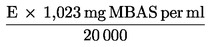
where E is the sample weight in mg. To establish the calibration curve, withdraw 1, 2, 4, 6, 8 ml portions of the standard solution and dilute each to 100 ml with deionised water. Then proceed as stated under item 2.3 including a blank determination. 2.5. Calculation of results
The amount of anionic surfactant (MBAS) in the sample is read from the calibration curve (2.4). The MBAS content of the sample is given by:

where: V = ml volume of the sample used. Express the results as sodium dodecylbenzene sulphonate (MW 348). 2.6. Expression of results
Express the results as MBAS mg/l to the nearest 0,1. 3. Determination of non-ionic surfactants in biodegradation test liquors
3.1. Principle
Surface active agents are concentrated and isolated by gas stripping. In the sample used, the quantity of non-ionic surfactant should be in the range 250-800 g. The stripped surfactant is dissolved in ethyl acetate. After phase separation and evaporation of the solvent, the non-ionic surfactant is precipitated in aqueous solution with modified Dragendorff reagent (KBiI4 + BaCl2 + glacial acetic acid). The precipitate is filtered, washed with glacial acetic acid and dissolved in ammonium tartrate solution. The bismuth in the solution is titrated potentiometrically with pyrrolidinedithiocarbamate solution at pH 4-5 using a bright platinum indicator electrode and a calomel or silver/silver chloride reference electrode. The method is applicable to non-ionic surfactants containing 6-30 alkylene oxide groups. The titration result is multiplied by the empirical factor of 54 for conversion to the reference substance nonylphenol condensed with 10 mols ethylene oxide (NP 10). 3.2. Reagents and Equipment
Reagents are to be made up in deionised water.
|
3.2.1.
|
Pure ethyl acetate, freshly distilled.
|
|
3.2.2.
|
Sodium bicarbonate, NaHCO3 AR.
|
|
3.2.3.
|
Dilute hydrochloric acid [20 ml concentrated acid (HCl) diluted to 1 000 ml with water]
|
|
3.2.4.
|
Methanol AR, freshly distilled, stored in a glass bottle.
|
|
3.2.5.
|
Bromocresol purple, 0,1 g in 100 ml methanol.
|
|
3.2.6.
|
Precipitating agent: the precipitating agent is a mixture of two volumes of solution A and one volume of solution B. The mixture is stored in a brown bottle and can be used for up to one week after mixing.
3.2.6.1. Solution A
Dissolve 1,7 g bismuth nitrate, BiONO3.H2O AR, in 20 ml glacial acetic acid, and make up to 100 ml with water. Then dissolve 65 g potassium iodide AR in 200 ml water. Mix these two solutions in a 1 000 ml measuring flask, add 200 ml glacial acetic acid (3.2.7) and make up to 1 000 ml with water.
3.2.6.2. Solution B
Dissolve 290 g barium chloride, BaCl2.2H2O AR, in 1 000 ml of water.
|
|
3.2.7.
|
Glacial acetic acid 99-100 % (lower concentrations are unsuitable).
|
|
3.2.8.
|
Ammonium tartrate solution: mix 12,4 g tartaric acid AR and 12,4 ml of ammonia solution AR (d = 0,910 g/ml) and make up to 1 000 ml with water (or use the equivalent amount of ammonium tartrate AR).
|
|
3.2.9.
|
Dilute ammonia solution: 40 ml ammonia solution AR (d = 0,910 g/ml) diluted to 1 000 ml with water.
|
|
3.2.10.
|
Standard acetate buffer: dissolve 40 g solid sodium hydroxide AR, in 500 ml water in a beaker and allow to cool. Add 120 ml glacial acetic acid (3.2.7). Mix thoroughly, cool and transfer to a 1 000 ml volumetric flask. Make up to the mark with water.
|
|
3.2.11.
|
Pyrrolidinedithiocarbamate solution (known as ‘carbate solution’): dissolve 103 mg sodium pyrrolidinedithiocarbamate, C5H8NNaS2.2H2O, in about 500 ml water, add 10 ml of n-amyl alcohol AR and 0,5 g NaHCO3 AR, and make up to 1 000 ml with water.
|
|
3.2.12.
|
Copper sulphate solution (for standardisation of 3.2.11).
STOCK SOLUTION
Mix 1,249 g copper sulphate, CuSO4.5H2O AR, with 50 ml 0,5 M sulphuric acid and make up to 1 000 ml with water.
STANDARDSOLUTION
Mix 50 ml stock solution with 10 ml 0,5 M H2SO4 and make up to 1 000 ml with water.
|
|
3.2.13.
|
Sodium chloride AR.
|
|
3.2.14.
|
Gas-stripping apparatus (see Figure 5).
The diameter of the sintered disc must be the same as the internal diameter of the cylinder.
|
|
3.2.15.
|
Separating funnel, 250 ml.
|
|
3.2.16.
|
Magnetic stirrer with magnet 25-30 mm.
|
|
3.2.17.
|
Gooch crucible, diameter of the perforated base = 25 mm, Type G4.
|
|
3.2.18.
|
Circular glass-fibre filter papers, 27 mm diameter with fibre diameter 0,3-1,5 m.
|
|
3.2.19.
|
Two filter flasks with adapters and rubber collars, 500 and 250 ml respectively.
|
|
3.2.20.
|
Recording potentiometer fitted with a bright platinum indicator electrode and a calomel or silver/silver chloride reference electrode with a 250 mV range, with automatic burette of 20-25 ml capacity, or alternative manual equipment.
|
3.3. Method
3.3.1. Concentration and separation of the surfactant
Filter the aqueous sample through a qualitative filter paper. Discard the first 100 ml of the filtrate. Into the stripping apparatus, previously rinsed with ethyl acetate, place a measured quantity of the sample, such that it contains between 250-800 g non-ionic surfactant. To improve the separation add 100 g sodium chloride and 5 g sodium bicarbonate. If the volume of the sample exceeds 500 ml, add these salts to the stripping apparatus in solid form, and dissolve by passing nitrogen or air through. If a smaller-sized sample is used, dissolve the salts in 400 ml water and then add to the stripping apparatus. Add water to bring the level to the upper stopcock. Cautiously add 100 ml ethyl acetate on top of the water. Fill the wash-bottle in the gas-line (nitrogen or air) two-thirds full with ethyl acetate. Pass a gas stream of 30-60 l/h through the apparatus; the use of a flowmeter is recommended. The rate of aeration must be increased gradually at the beginning. The gas rate must be so adjusted that the phases remain noticeably separate to minimise the mixing of the phases and the solution of the ethyl acetate in the water. Stop the gas flow after five minutes. If there is a reduction of more than 20 % in the volume of the organic phase through solution in water, the sublation must be repeated paying special attention to the rate of gas flow. Run off the organic phase into a separating funnel. Return any water in the separating funnel from the aqueous phase — it should only be a few ml — to the stripping apparatus. Filter the ethyl acetate phase through a dry qualitative filter paper into a 250 ml beaker. Put a further 100 ml ethyl acetate into the stripping apparatus and again pass nitrogen or air through for five minutes. Draw off the organic phase into the separating funnel used for the first separation, reject the aqueous phase and run the organic phase through the same filter as the first ethyl acetate portion. Rinse both the separating funnel and the filter with about 20 ml ethyl acetate. Evaporate the ethyl acetate extract to dryness using a water-bath (fume cupboard). Direct a gentle stream of air over the surface of the solution to accelerate the evaporation. 3.3.2. Precipitation and filtration
Dissolve the dry residue from 3.3.1 in 5 ml methanol, add 40 ml water and 0,5 ml dilute HCl (3.2.3) and stir the mixture with a magnetic stirrer. To this solution add 30 ml of precipitating agent (3.2.6) from a measuring cylinder. The precipitate forms after repeated stirring. After stirring for ten minutes leave the mixture to stand for at least five minutes. Filter the mixture through a Gooch crucible, the base of which is covered with a glass-fibre filter paper. First wash the filter under suction with about 2 ml glacial acetic acid. Then thoroughly wash the beaker, magnet, and crucible with glacial acetic acid, of which about 40-50 ml is necessary. It is not necessary to quantitatively transfer the precipitate adhering to the sides of the beaker, to the filter, because the solution of the precipitate for the titration is returned to the precipitating beaker, and the remaining precipitate will then be dissolved. 3.3.3. Dissolution of the precipitate
Dissolve the precipitate in the filter crucible by the addition of hot ammonium tartrate solution (about 80 ° C) (3.2.8) in three portions of 10 ml each. Allow each portion to stand in the crucible for some minutes before being sucked through the filter into the flask. Put the contents of the filter flask into the beaker used for the precipitation. Rinse the sides of the beaker with a further 20 ml of tartrate solution to dissolve the rest of the precipitate. Carefully wash the crucible, adapter and filter flask with 150-200 ml water, and return the rinsing water to the beaker used for the precipitation. 3.3.4. The titration
Stir the solution using a magnetic stirrer (3.2.16), add a few drops of bromocresol purple (3.2.5) and add the dilute ammonia solution (3.2.9) until the colour turns violet (the solution is initially weakly acid from the residue of acetic acid used for rinsing). Then add 10 ml standard acetate buffer (3.2.10), immerse the electrodes in the solution, and titrate potentiometrically with standard ‘carbate solution’ (3.2.11), the burette tip being immersed in the solution. The titration rate should not exceed 2 ml/min. The endpoint is the intersection of the tangents to the two branches of the potential curve. It will be observed occasionally that the inflection in the potential curve becomes flattened; this can be eliminated by carefully cleaning the platinum electrode (by polishing with emery paper). 3.3.5. Blank determinations
At the same time run a blank determination through the whole procedure with 5 ml methanol and 40 ml water, according to the instructions in 3.3.2. The blank titration should be below 1 ml, otherwise the purity of the reagents (3.2.3, 3.2.7, 3.2.8, 3.2.9, 3.2.10) is suspect, especially their content of heavy metals, and they must be replaced. The blank must be taken into account in the calculation of the results. 3.3.6. Control of the factor of the ‘carbate solution’
Determine the factor for the carbate solution on the day of use. To do this, titrate 10 ml of the copper sulphate solution (3.2.12) with ‘carbate solution’ after the addition of 100 ml water and 10 ml standard acetate buffer (3.2.10). If the amount used is a ml, the factor f is:

and all the results of the titration are multiplied by this factor. 3.4. Calculation of results
Every non-ionic surfactant has its own factor, depending on its composition, particularly on the length of the alkene oxide chain. The concentration of non-ionic surfactant is expressed in relation to a standard substance — a nonyl phenol with ten ethylene oxide units (NP 10) — for which the conversion factor is 0,054. Using this factor the amount of surfactant present in the sample is found expressed as mg of NP 10 equivalent, as follows: (b — c) xfx 0,054 = mg non-ionic surfactant as NP 10 where:
|
b
|
=
|
volume of ‘carbate solution’ used by the sample (ml),
|
|
c
|
=
|
volume of ‘carbate solution’ used by the blank (ml),
|
|
f
|
=
|
factor of the ‘carbate solution’.
|
3.5. Expression of results
Express the results in mg/l as NP 10 to the nearest 0,1. 4. Preliminary treatment of anionic surfactants to be tested
4.1. Preliminary notes
4.1.1. Treatment of samples
The treatment of anionic surface-active agents and formulated detergents prior to the determination of primary biodegradability in the confirmatory test is:
|
Products
|
Treatment
|
|
Anionic surfactants
|
None
|
|
Formulated detergents
|
Alcoholic extraction followed by separation of the anionic surfactants by ion exchange
|
The purpose of the alcoholic extraction is to eliminate the insoluble and inorganic ingredients of the commercial product, which in some circumstances might upset the biodegradability test. 4.1.2. Ion-exchange procedure
Isolation and separation of anionic surface active agents from soap, non-ionic and cationic surfactants are required for correct biodegradability tests. This is achieved by an ion-exchange technique using a macro-porous exchange resin and suitable eluants for fractional elution. Thus soap, anionic and non-ionic surfactants may be isolated in one procedure. 4.1.3. Analytical control
After homogenising, the concentration of anionic surfactants in the synthetic detergent is determined according to the MBAS analytical procedure. The soap content is determined by a suitable analytical method. This analysis of the products is necessary to calculate the quantities required for preparing fractions for the biodegradability test. Quantitative extraction is not necessary; however, at least 80 % of the anionic surfactants should be extracted. Usually, 90 % or more is obtained. 4.2. Principle
From a homogeneous sample (powders, dried pastes and dried liquids) an ethanol extract is obtained which contains the surfactants, soap and other alcohol-soluble constituents of the synthetic detergent sample. The ethanol extract is evaporated to dryness, dissolved in an isopropanol/water mixture and the solution obtained is passed through a strongly acidic cation exchange/macro-porous anion exchange combination heated to 50 ° C. This temperature is necessary to prevent the precipitation of any fatty acids which may be present in acidic media. Any non-ionic surfactants remain in the effluent. Soap fatty acids are separated by extraction with ethanol containing CO2. The anionic surfactants are then obtained as ammonium salts, by elution with an aqueous isopropanolic solution of ammonium bicarbonate. These ammonium salts are used for the degradation test. Cationic surfactants that might upset the biodegradability test and the analytical procedure are eliminated by the cation exchanger placed above the anion exchanger. 4.3. Chemicals and equipment
4.3.2. Ethanol, 95 % (v/v) C2H5OH (permissible denaturant: methyl ethyl ketone or methanol)
4.3.3. Isopropanol/water mixture (50/50 v/v):
— 50 parts by volume isopropanol, CH3CHOH.CH3, and
— 50 parts by volume water (4.3.1)
4.3.4. Solution of carbon dioxide in ethanol (approximately 0,1 % CO2): using a delivery tube with a built-in sinter, pass carbon dioxide, CO2, through the ethanol (4.3.2) for ten minutes. Use fresh solutions only
4.3.5. Ammonium bicarbonate solution (60/40 v/v): 0,3 mol NH4HCO3 in 1 000 ml of an isopropanol/water mixture consisting of 60 parts by volume isopropanol and 40 parts by volume water (4.3.1)
4.3.6. Cation exchanger (KAT), strongly acidic, resistant to alcohol (50-100 mesh)
4.3.7. Anion exchanger (AAT), macro-porous, Merck Lewatit MP 7080 (70-150 mesh) or equivalent
4.3.8. Hydrochloric acid, 10 % HCl (w/w)
4.3.9. 2 000 ml round-bottomed flask with ground glass stopper and reflux condenser
4.3.10. 90 mm diameter suction filter (heatable) for filter papers
4.3.11. 2 000 ml filter flask
4.3.12. Exchange columns with heating jacket and tap: inner tube 60 mm in diameter and 450 mm in height (see Figure 4)
4.3.14. Vacuum drying oven
4.3.16. Rotary evaporator
4.4. Preparation of extract and separation of anionic active agents
4.4.1. Preparation of extract
The quantity of surfactants necessary for the biodegradation test is about 50 g MBAS. Normally, the quantity of product to be extracted will not exceed 1 000 g, but it may be necessary to extract further quantities of sample. For practical reasons, the quantity of product used should in most cases be limited to 5 000 g in preparing extracts for the biodegradation test. Experience has shown that there are advantages in using a number of small extractions rather than one large extraction. The exchanger quantities specified are designed for a working capacity of 600-700 mmoles of surfactants and soap. 4.4.2. Isolation of alcohol-soluble constituents
Add 250 g of the synthetic detergent to be analysed to 1 250 ml ethanol, heat the mixture to boiling point and reflux for one hour with stirring. Pass the hot alcoholic solution through a coarse-pored suction filter heated to 50 ° C and filter rapidly. Wash the flask and suction filter with approximately 200 ml hot ethanol. Collect the filtrate and filter washings in a filter flask. In the case of pastes or liquid products to be analysed, make sure that not more than 55 g anionic surfactants and 35 g soap are contained in the sample. Evaporate this weighed sample to dryness. Dissolve the residue in 2 000 ml ethanol and proceed as described above. In the case of powders of low apparent density (< 300 g/l) it is recommended to increase the ethanol ratio in the relation 20:1. Evaporate the ethanolic filtrate to dryness, preferably by means of a rotary evaporator. Repeat the operation if a greater quantity of extract is required. Dissolve the residue in 5 000 ml isopropanol/water mixture. Preparation of ion-exchange columns 4.4.3. CATION-EXCHANGE COLUMN
Place 600 ml cation-exchange resin (4.3.6) in a 3 000 ml beaker and cover by adding 2 000 ml hydrochloric acid (4.3.8). Allow to stand for at least two hours, with occasional stirring. Decant the acid and transfer the resin into the column (4.3.12) by means of deionised water. The column should contain a glass-wool plug. Wash the column with deionised water at a rate of 10-30 ml/min until the eluate is free of chloride. Displace the water with 2 000 ml isopropanol/water mixture (4.3.3) at a rate of 10-30 ml/min. The exchange column is now ready for operation. ANION-EXCHANGE COLUMN Place 600 ml anion-exchange resin (4.3.7) in a 3 000 ml beaker and cover by adding 2 000 ml deionised water. Allow the resin to swell for at least two hours. Transfer the resin into the column by means of deionised water. The column should contain a glass-wool plug. Wash the column with 0,3 M ammonium bicarbonate solution (4.3.5) until free of chloride. This requires about 5 000 ml solution. Wash again with 2 000 ml deionised water. Displace the water with 2 000 ml isopropanol/water mixture (4.3.3) at a rate of 10-30 ml/min. The exchange column is now in the OH-form and ready for operation. Ion-exchange procedure
|
4.4.4.
|
Connect the exchange columns so that the cation-exchange column is placed on top of the anion-exchange column.
Heat the exchange columns to 50 ° C using thermostatic control.
Heat 5 000 ml of the solution obtained in item 4.4.2 to 60 ° C and pass the solution through the exchanger combination at a rate of 20 ml/min. Wash the columns with 1 000 ml hot isopropanol/water mixture (4.3.3).
To obtain the anionic surface active agents (MBAS), disconnect the KAT column. Using 5 000 ml ethanol/CO2 solution at 50 ° C (4.3.4), elute the soap fatty acids out of the KAT column. Reject the eluate.
Then elute the MBAS out of the AAT column with 5 000 ml ammonium bicarbonate solution (4.3.5). Evaporate the eluate to dryness using a steam bath or in a rotary evaporator.
The residue contains the MBAS (as ammonium salt) and possible non-surfactant anionics that have no detrimental effect on the biodegradation test. Add deionised water to the residue until a definite volume is obtained and determine the MBAS content in an aliquot. The solution is used as a standard solution of the anionic synthetic detergents for the biodegradation test. The solution should be kept at a temperature below 5 ° C.
Regeneration of ion exchange resins
|
|
4.4.5.
|
The cation exchanger is rejected after use. Passing an additional quantity of ammonium bicarbonate solution (4.3.5) down the column at a flow rate of approximately 10 ml/min until the eluate is free from anionic surfactants (methylene blue test) regenerates the anion-exchange resin.
Then pass 2 000 ml isopropanol/water mixture (4.3.3) down the anion exchanger to wash. The anion exchanger is again ready for operation.
Preliminary treatment of non-ionic surfactants to be tested
|
5. Preliminary notes
5.1. Treatment of samples
|
5.1.1.
|
The treatment of non-ionic surface-active agents and formulated detergents prior to the determination of primary biodegradability in the confirmatory test is:
The purpose of the alcoholic extraction is to eliminate the insoluble and inorganic ingredients of the commercial product, which in some circumstances might upset the biodegradability test.
|
Products
|
Treatment
|
|
Non-ionic surfactants
|
None
|
|
Formulated detergents
|
Alcoholic extraction followed by separation of the non-ionic surfactants by ion exchange
|
Ion-exchange procedure
|
|
5.1.2.
|
Isolation and separation of non-ionic surface active agents from soap, anionic and cationic surfactants are required for correct biodegradability tests.
This is achieved by an ion exchange technique using a macro-porous exchange resin and suitable eluants for fractional elution. Thus soap, anionic and non-ionic surfactants may be isolated in one procedure.
Analytical control
|
|
5.1.3.
|
After homogenising, the concentration of anionic and non-ionic surfactants in the detergent is determined according to the MBAS and BiAS analytical procedure. The soap content is determined by a suitable analytical method.
This analysis of the product is necessary to calculate the quantities required preparing fractions for the biodegradability tests.
Quantitative extraction is not necessary; however, at least 80 % of the non-ionic surfactants should be extracted. Usually, 90 % or more is obtained.
Principle
|
|
5.2.
|
From a homogeneous sample (powders, dried paste and dried liquids) an ethanol extract is obtained which contains the surfactants, soap and other alcohol-soluble constituents of the detergent sample.
The ethanol extract is evaporated to dryness, dissolved in an isopropanol/water mixture and the solution obtained is passed through a strongly acidic cation exchange/macro-porous anion exchange combination heated to 50 ° C. This temperature is necessary to prevent the precipitation of any fatty acids which may be present in acidic media. The non-ionic surfactants are obtained from the effluent by evaporation.
Cationic surfactants, which might upset the degradation test and the analytical procedure, are eliminated by the cation exchanger placed above the anion exchanger.
Chemicals and equipment
|
|
5.3.
|
Deionised water
5.3.1. Ethanol, C2H5OH 95 % (v/v) (permissible denaturant: methyl-ethyl ketone or methanol)
5.3.2. Isopropanol/water mixture (50/50 v/v):
5.3.3. 50 parts by volume isopropanol, CH3CHOH.CH3, and
— 50 parts by volume water (5.3.1)
— Ammonium bicarbonate solution (60/40 v/v):
5.3.4. 0,3 mol NH4HCO3 in 1 000 ml of an isopropanol/water mixture consisting of 60 parts by volume isopropanol and 40 parts by volume water (5.3.1)
Cation exchanger (KAT), strongly acidic, resistant to alcohol (50-100 mesh)
5.3.5. Anion exchanger (AAT), macro-porous, Merck Lewatit MP 7080 (70-150 mesh) or equivalent
5.3.6. Hydrochloric acid, 10 % HCl w/w
5.3.7. 2 000 ml round-bottomed flask with ground glass stopper and reflux condenser
5.3.8. 90 mm diameter suction Filter (heatable) for filter papers
5.3.9. 2 000 ml filter flask
5.3.10. Exchange columns with heating jacket and tap: inner tube 60 mm in diameter and 450 mm in height (see Figure 4)
5.3.12. Vacuum drying oven
5.3.14. Rotary evaporator
5.3.15. Preparation of extract and separation of non-ionic active agents
|
|
5.4.
|
Preparation of extract
|
5.4.1.
|
The quantity of surfactant necessary for the degradation test is about 25 g BiAS.
In preparing extracts for the degradation tests, the quantity of product to be used should be limited to a maximum of 2 000 g. Therefore it may be necessary to carry out the operation two or more times in order to obtain sufficient quantity for the degradation tests.
Experience has shown that there are advantages in using a number of small extractions rather than one large extraction.
Isolation of alcohol-soluble constituents
|
|
5.4.2.
|
Add 250 g of the synthetic detergent to be analysed to 1 250 ml ethanol and heat the mixture to boiling point and reflux for one hour with stirring. Pass the hot alcoholic solution through a coarse-pored suction filter heated to 50 ° C and filter rapidly. Wash the flask and suction filter with approximately 200 ml hot ethanol. Collect the filtrate and filter washings in a filter flask.
In the case of pastes or liquid products to be analysed, make sure that not more than 25 g anionic surfactants and 35 g soap are contained in the sample. Evaporate this weighed sample to dryness. Dissolve the residue in 500 ml ethanol and proceed as described above.
In the case of powders of low apparent density (< 300 g/l) it is recommended to increase the ethanol ratio in the relation 20:1.
Evaporate the ethanolic filtrate to complete dryness, preferably by means of rotary evaporator. Repeat the operation if a greater quantity of extract is required. Dissolve the residue in 5 000 ml isopropanol/water mixture.
|
|
5.4.3.
|
Preparation of ion-exchange columns CATION-EXCHANGE COLUMN
Place 600 ml cation-exchange resin (5.3.5) in a 3 000 ml beaker and cover by adding 2 000 ml hydrochloric acid (5.3.7). Allow to stand for at least two hours, with occasional stirring.
Decant the acid and transfer the resin into the column (5.3.11) by means of deionised water. The column should contain a glass-wool plug. Wash the column with deionised water at a rate of 10-30 ml/min until the eluate is free of chloride.
Displace the water with 2 000 ml isopropanol/water mixture (5.3.3) at a rate of 10-30 ml/min. The exchange column is now ready for operation.
ANION-EXCHANGE COLUMN
Place 600 ml anion-exchange resin (5.3.6) in a beaker and cover by adding 2 000 ml deionised water. Allow the resin to swell for at least two hours. Transfer the resin into the column by means of deionised water. The column should contain a glass-wool plug.
Wash the column with 0,3 M ammonium bicarbonate solution (5.3.4) until free of chloride. This requires about 5 000 ml solution. Wash again with 2 000 ml deionised water.
Displace the water with 2 000 ml isopropanol/water mixture (5.3.3) at a rate of 10-30 ml/min. The exchange column is now in the OH form and ready for operation.
|
|
5.4.4.
|
Ion-exchange procedure Connect the exchange columns so that the cation-exchange column is placed on top of the anion-exchange column. Heat the exchange columns to 50 ° C using thermostatic control. Heat 5 000 ml of the solution obtained in item 5.4.2 to 60 ° C and pass the solution through the exchanger combination at a rate of 20 ml/min. Wash the columns with 1 000 ml hot isopropanol/water mixture (5.3.3).
To obtain the non-ionic surfactants collect the filtrate and filter washings and evaporate to dryness, preferably by means of a rotary evaporator. The residue contains the BiAS. Add deionised water until a defined volume is obtained and determine the BiAS content in an aliquot. The solution is used as a standard solution of non-ionic surfactants for the degradation test. The solution should be kept at a temperature below 5 ° C.
|
|
5.4.5.
|
Regeneration of ion exchange resins The cation exchanger is rejected after use.
Passing about 5 000 -6 000 ml of ammonium bicarbonate solution (5.3.4) down the column at a flow rate of approximately 10 ml/min until the eluate is free from anionic surfactants (methylene blue test) regenerates the anion-exchange resin. Then pass 2 000 ml isopropanol/water mixture (5.3.3) down the anion exchanger to wash. The anion exchanger is again ready for operation.
|
|
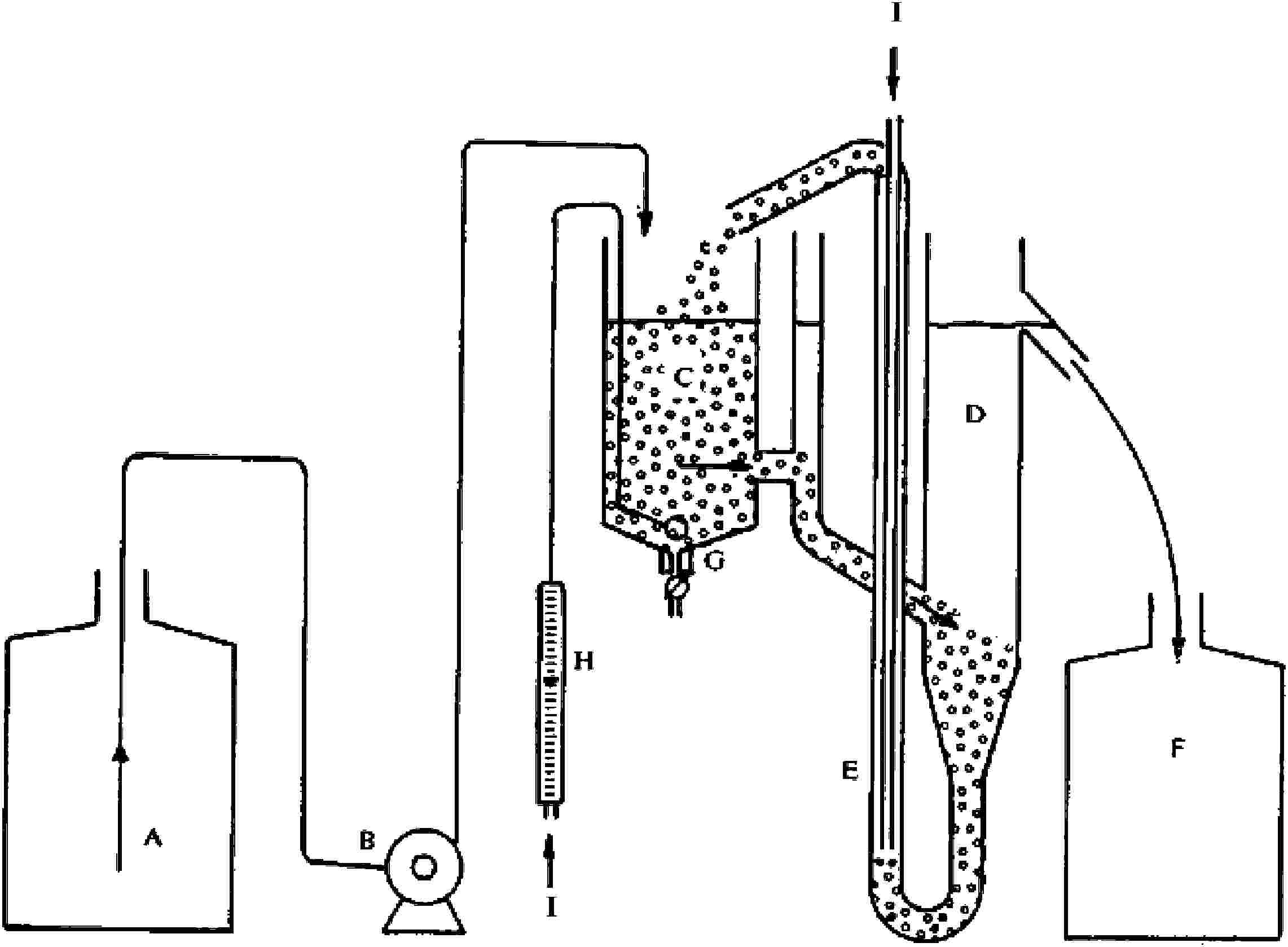 Figure 1 Activated sludge plant: overviews
|
C
|
Aeration chamber (three litres capacity)
|
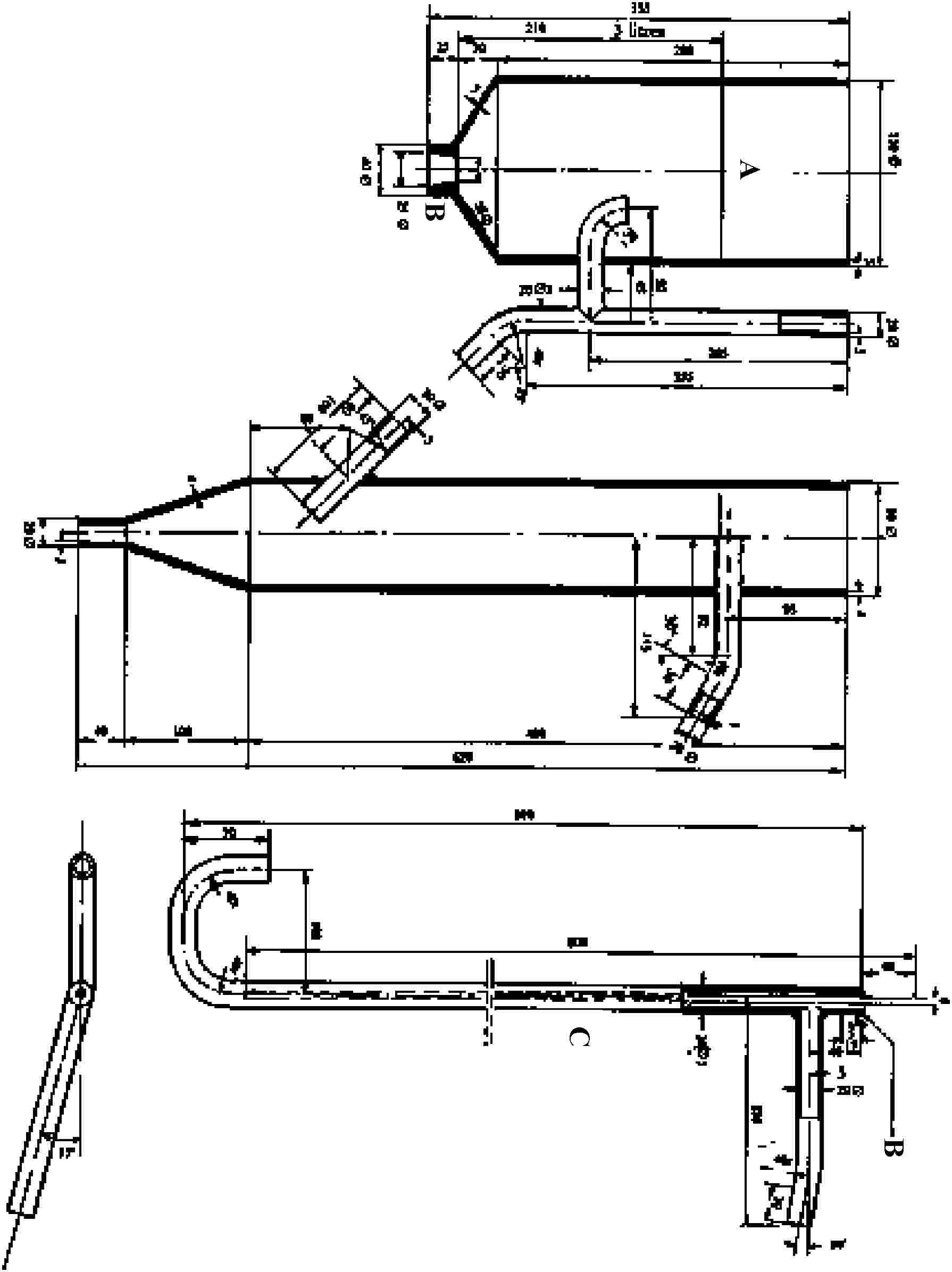 Figure 2 Activated sludge plant: detail (dimensions in millimetres)
|
C
|
Glass or waterproof plastic (hard PVC)
|
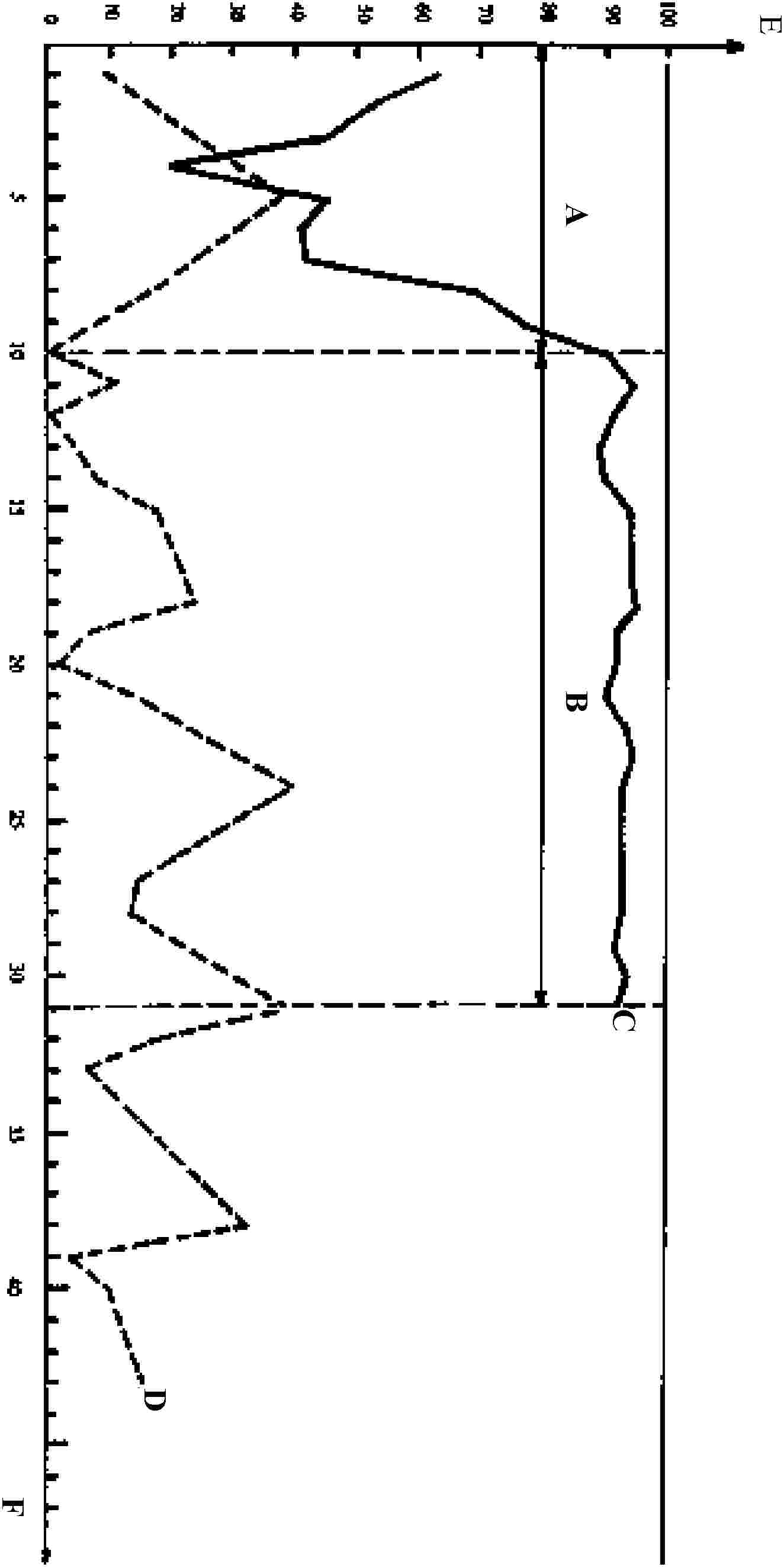 Figure 3 Calculation of biodegradability — Confirmatory test
|
B
|
Period used for calculation (twenty-one days)
|
|
C
|
Readily biodegradable surfactant
|
|
D
|
Surfactant not readily biodegradable
|
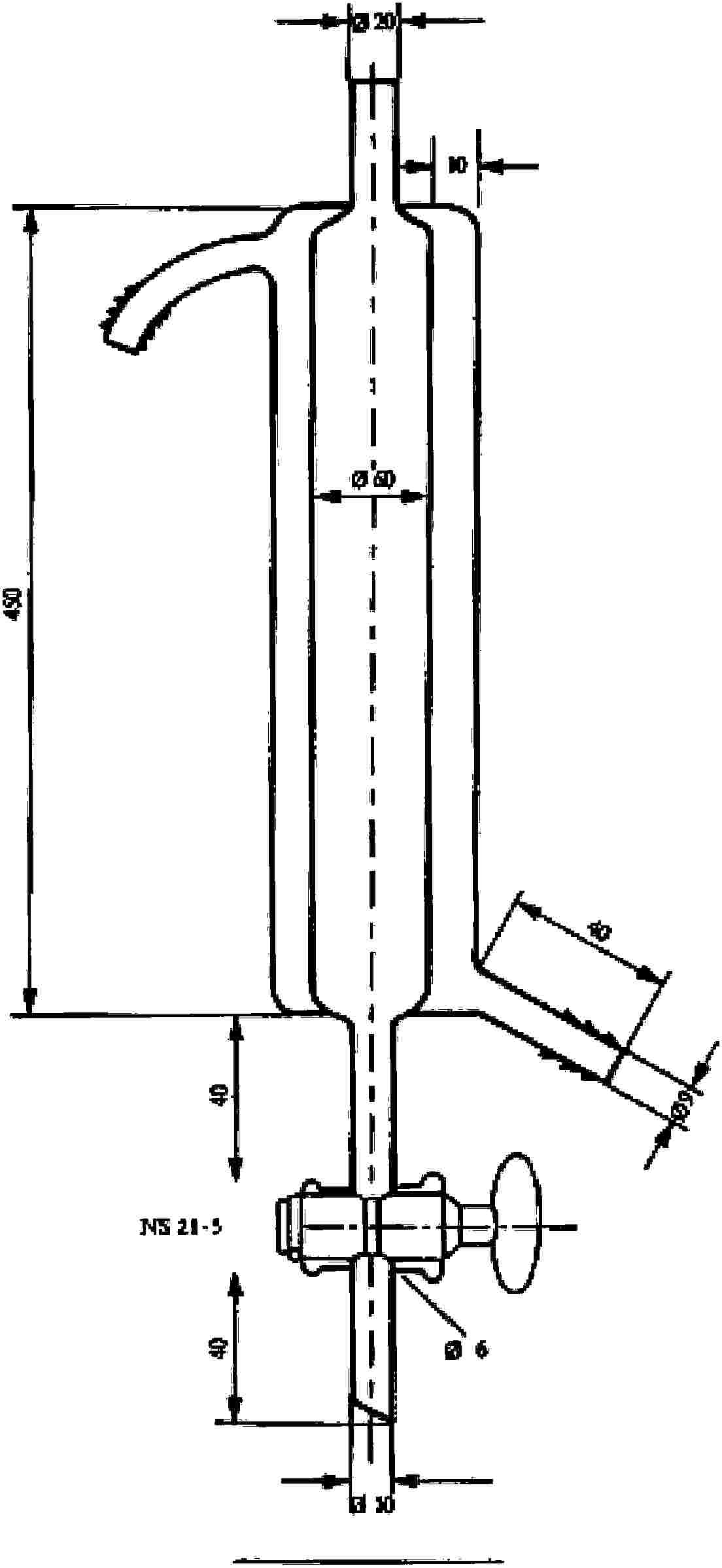 Figure 4 Heated exchange column (dimensions in millimetres)
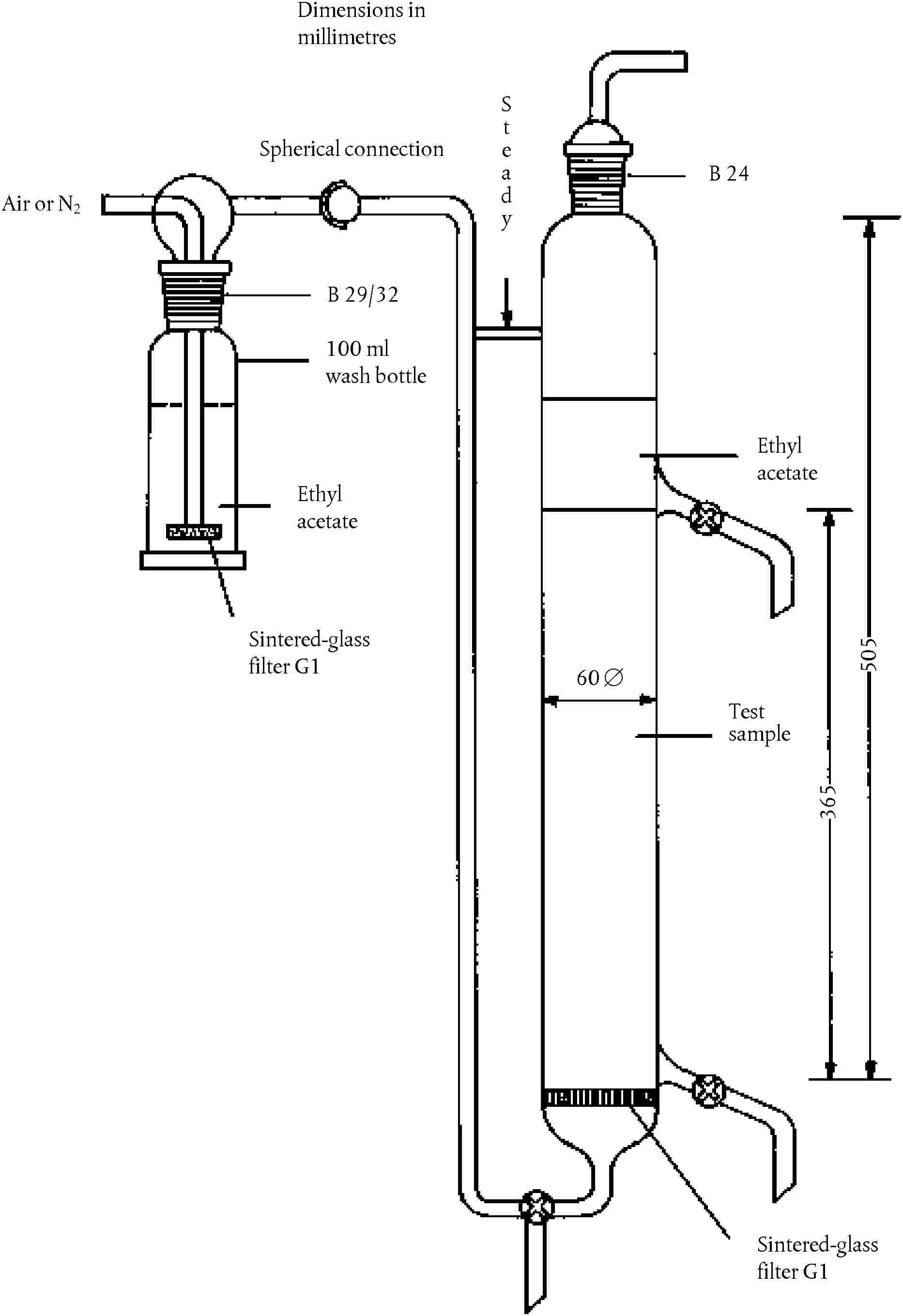 Figure 5 Gas stripping apparatus (dimensions in millimetres)
|
,
1.1 Reference
1.2 Utvrđeni zahtjevi
1.3 Povezani standardi
2. Utvrđeni zahtjevi
3. Povezani standardi
|